
Quick summary
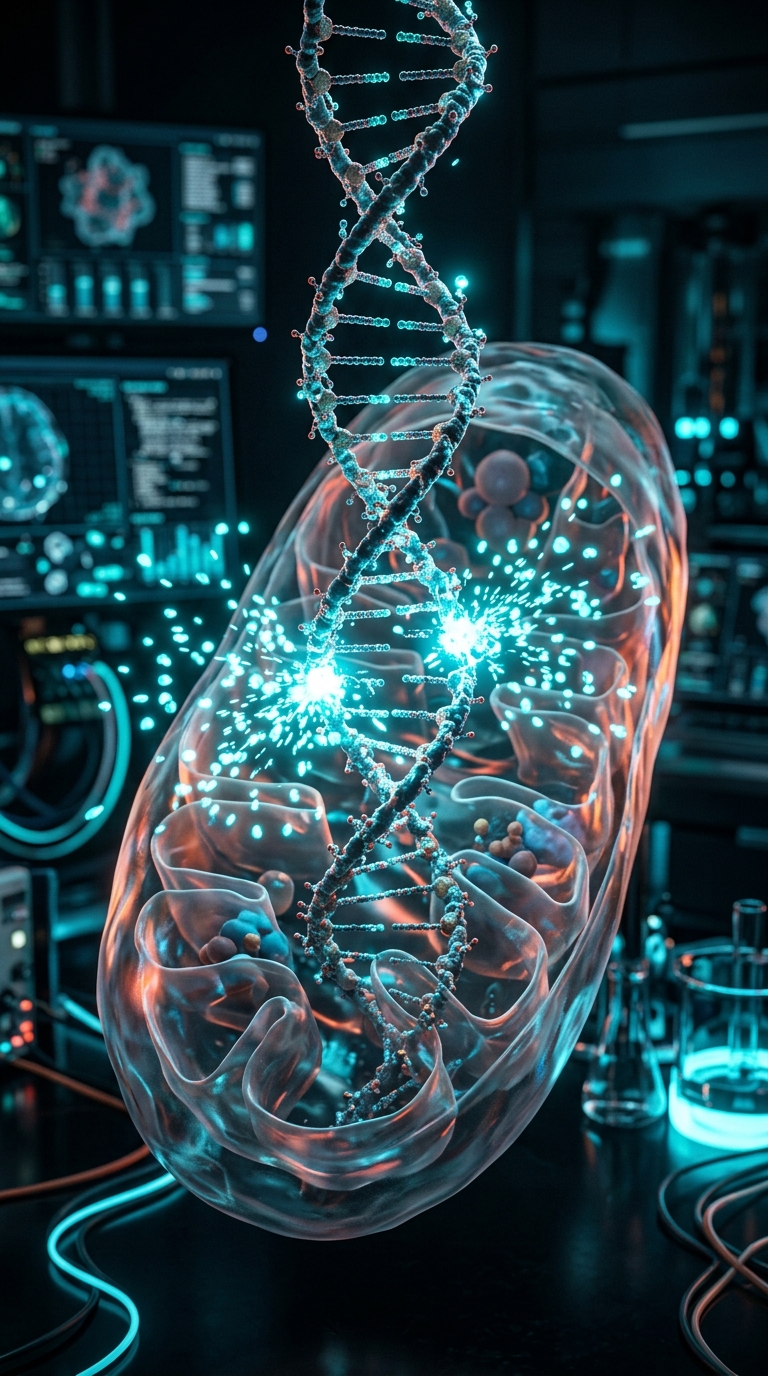
He NAD+ (nicotinamide adenine dinucleotide) It is the central coenzyme of energy metabolism and the obligatory substrate of the sirtuins (SIRT1–7), enzymes that regulate DNA repair, mitochondrial biogenesis, and epigenetic expression. Their levels fall by approximately 501% between the ages of 20 and 60. The combination of a direct precursor of NAD+ with trans resveratrol —the allosteric activator of SIRT1— is one of the best-studied levers in molecular longevity research.
Mechanism of action
- mitochondrial NAD+: It rescues the respiratory chain and oxidative phosphorylation when there is age-related metabolic decline.
- Sirtuins (SIRT1, SIRT3): They deacetylate key transcription factors (PGC-1α, FOXO3, p53) involved in mitochondrial biogenesis and stress response.
- DNA repair: PARP1 uses NAD+ to repair genomic damage. Without its precursor, PARP competes with sirtuins and depletes the pool.
- trans-resveratrol: SIRT1 allosteric activator with documented synergy in caloric restriction.
- AMPK axis: NAD+ and resveratrol converge on AMPK, a central energy sensor.
Clinical evidence
Robust evidence
- Elevated NAD+ in blood and tissue with oral precursors (NR, NMN): Martens CR et al. (Nat Commun, 2018).
- Improved endothelial function and arterial stiffness in adults >55 years (Tribolet G et al.).
- Resveratrol and cardiovascular mortality: meta-analysis with modest but consistent effect on lipids and endothelial function.
Plausible / suggested
- Subjective improvement of energy and resistance to exertion in people over 50.
- Post-exercise recovery support for master athletes.
- Favorable effect on inflammatory markers (CRP, IL-6) in small studies.
Speculative / preclinical
- Extended lifespan (longevity) in animal models —not confirmed in humans.
- Reversal of epigenetic markers of aging.
- Neuroprotection in models of Parkinson's and Alzheimer's.
Molecular form and bioavailability
The most studied oral precursors of NAD+ are nicotinamide riboside (NR) y Nicotinamide mononucleotide (NMN). Both increase intracellular NAD+ in humans; the choice depends on cost, country regulations, and format. Pure nicotinamide also increases NAD+ but with a different pharmacological profile (it inhibits sirtuins at high doses).
Trans-resveratrol has low oral bioavailability (≈20%) due to extensive hepatic metabolism; piperine or liposomal formulations improve absorption. Take with fat improves solubility.
Limitations and what it DOES NOT do
- It does not reverse aging. It modulates associated processes; the effect on humans is modest.
- It is not an acute-effect energizer — the impact is measured in weeks to months.
- In healthy young adults without metabolic stress, the marginal benefit is low.
- It does not replace exercise, intermittent fasting, or calorie restriction—it complements them.
Target population
- Adults >40–50 years with subjective energy decline and recovery.
- People with cardiometabolic markers borderline in range (pre-metabolic syndrome profile).
- Master athletes seeking to support mitochondrial biogenesis.
- Those who already practice intermittent fasting, calorie restriction, or zone 2 exercise and seek to amplify the signal.


Reviews
There are no reviews yet