
Quick summary
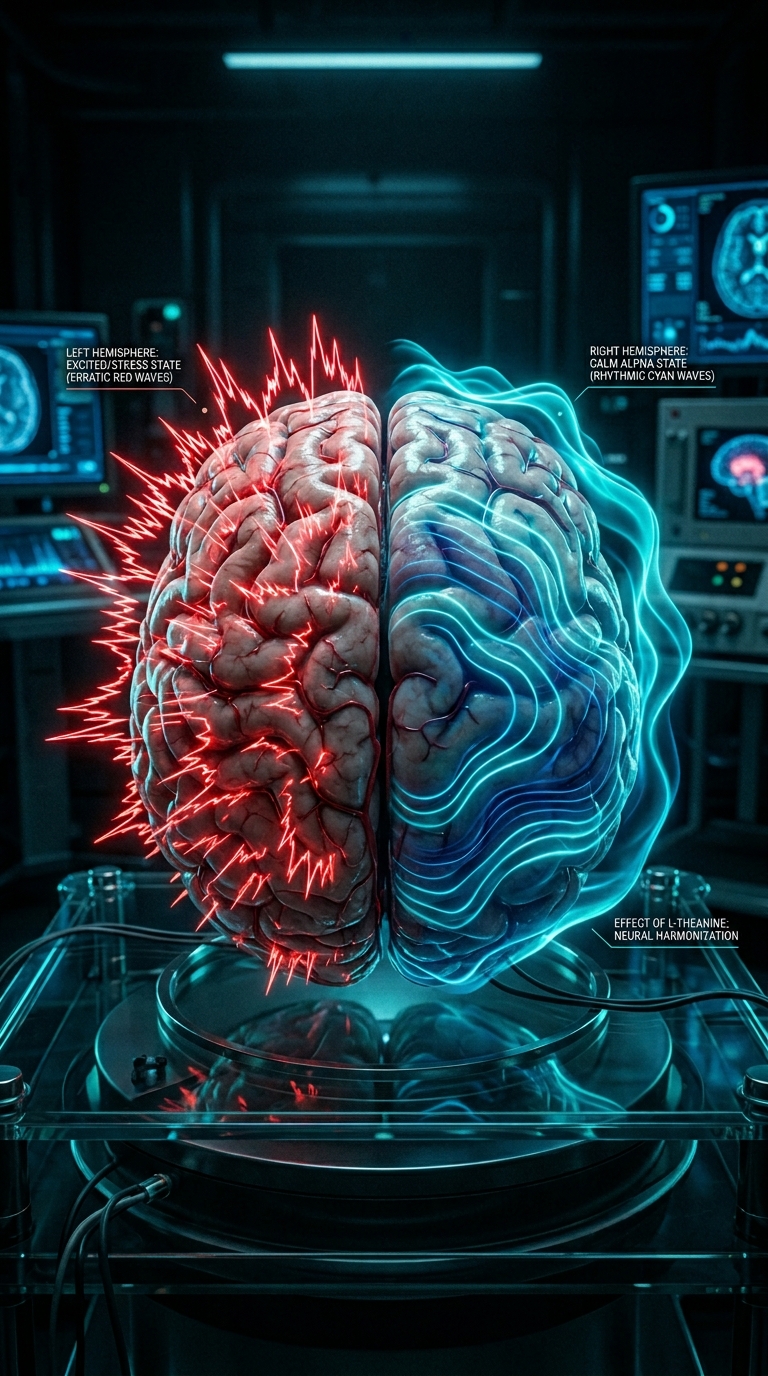
The L-theanine It is a non-proteinogenic amino acid naturally present in green tea (Camellia sinensisIt is one of the molecules with the best documented safety profile: it induces a state of calm alert —measurable as an increase in alpha brain waves (8–13 Hz)— without sedation, tolerance, or dependence. Designed to modulate the acute stress axis, improve focus under caffeine, and smooth sleep latency.
Mechanism of action
L-theanine is structurally analogous to glutamate and glutamine. It crosses the blood-brain barrier with rapid kinetics (Tmax ≈ 30–50 min) and acts simultaneously on several axes:
- Alpha waves (EEG): It increases in a dose-dependent manner alpha potency in the frontal and parieto-occipital cortex — the electrophysiological correlate of relaxed attention.
- GABA / glycine: partial agonist of GABA receptorsA and a positive modulator of glycinergic transmission.
- Glutamate / NMDA: weak antagonist that reduces excitotoxicity without dulling cognition.
- HPA axis: documented reduction of cortisol response to acute stressors (laboratory and real life).
- Dopamine / serotonin: moderate increase in hippocampus and striatum in animal models.
Clinical evidence
Robust evidence
- Calm and alert without sedation: Nobre et al. (Asia Pac J Clin Nutr, 2008) documented an increase in alpha waves with 50–200 mg in healthy humans.
- Cortisol attenuation in response to acute stress: Kimura et al. (Biological Psychological, 2007) — reduction of cardiovascular and endocrine response to mental stressor.
- Synergy with caffeine: Owen et al. (Nutr Neurosci, 2008) — improvement of sustained attention and accuracy in tasks with less adrenergic activation.
Plausible / suggested
- Improvement in subjective sleep quality and reduction in latency (Williams et al., Plant Foods Hum Nutr, 2020).
- Reduction of symptoms of stress and subclinical anxiety in 4 weeks (Hidese et al., Nutrients, 2019, n=30).
- Support in pediatric ADHD for fragmented sleep (small, inconclusive studies).
Speculative / preclinical
- Neuroprotection against excitotoxic glutamate (in vitro models).
- Modulation of intestinal microbiota via metabolites in the colon.
Molecular form and bioavailability
L-theanine is a specific enantiomer (D-theanine is metabolically inactive). enantiomerically pure It guarantees ≥99% of the L-isomer and is used in most clinical trials. Generic versions may contain racemic mixtures with reduced bioavailability.
Complete intestinal absorption, plasma half-life ≈ 60 min, does not accumulate. Can be taken with or without food.
Limitations and what it DOES NOT do
- It is not a sedativeIt does not induce sleep on its own; it helps you fall asleep if anxiety is blocking it.
- It is not a rescue anxiolytic for panic attacks or severe GAD.
- It does not replace behavioral therapy or sleep hygiene — it enhances them.
- The subjective effect is subtle; whoever is looking for an intense sensation is probably taking the wrong thing.
Target population
- Adults with daily stress, exams, presentations, morning cortisol spikes.
- Regular caffeine consumers seeking to soften the adrenergic component.
- People with difficulty initiating sleep due to a racing mind (not maintenance insomnia).
- Professionals with a demand for sustained attention under pressure.
Reviews
There are no reviews yet