Quick summary
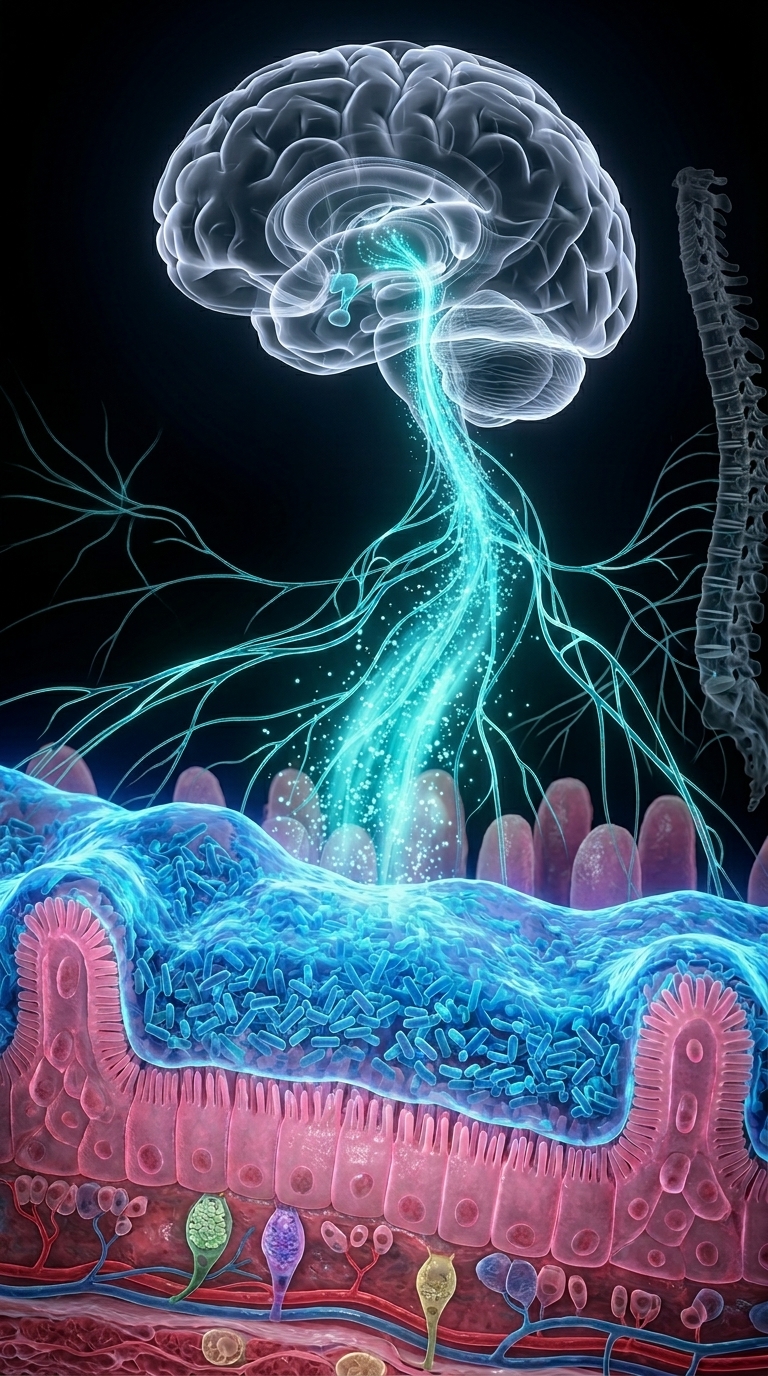
He gut-brain axis It is the bidirectional network that connects the enteric nervous system (the approximately 500 million neurons lining your gut) to the central nervous system. Communication travels through the vagus nerve, This is mediated by immune messengers (cytokines), microbial metabolites (short-chain fatty acids, neurotransmitters), and gut hormones. When this network becomes dysregulated, the brain receives a continuous signal of low-grade inflammation, which translates into brain fog, irritability, low-intensity anxiety, and decreased motivation.
Validated mechanisms
- Direct vagal pathway: Strains such as Lactobacillus rhamnosus JB-1 reduce anxiety in preclinical models via the vagus nerve. Vagotomy abolished the effect. The signal travels to the nucleus of the solitary tract and from there to the amygdala and hippocampus.
- Local production of neurotransmitters: The gut synthesizes approximately 901 TP3T of systemic serotonin, in addition to GABA (Lactobacillus, Bifidobacterium), dopamine, and norepinephrine. The microbiota dictates the setpoint.
- HPA axis: Validated psychobiotics (L. helveticus + B. longum) reduce urinary cortisol and reactivity to acute stress as measured by Trier test.
- Reduction of endotoxemia: sealing of intestinal tight junctions (zonulin), less bacterial LPS crossing into circulation, less activation of brain microglia, less neuroinflammation.
- Neuroactive postbiotics: Butyrate and propionate strengthen the blood-brain barrier, nourish colonocytes, and modulate BDNF gene expression in the hippocampus.
Strains with relevant clinical literature
- Lactobacillus rhamnosus (JB-1, GG strains) — GABAergic modulation, subclinical anxiety.
- Bifidobacterium longum (1714, NCC3001) — cortisol reduction and working memory improvement in human trials.
- Lactobacillus helveticus (R0052, in combination with B. longum R0175) — reduction of general psychological symptoms and free urinary cortisol.
- Bifidobacterium breve (A1, MCC1274) — cognitive improvement in adults with subjective memory complaints.
- Akkermansia muciniphila — sealing of intestinal barrier and improvement of metabolic markers (indirect effect on brain fog).
Expected human outcome
Response curve over 4 to 12 weeks: First, low-grade inflammation and postprandial bloating decrease; then, mood stabilizes and deep sleep quality improves; finally, brain fog is reduced and subjective processing speed increases. It's not an acute-response nootropic—it's infrastructure.
Warning: This content is for informational and educational purposes only, based on available scientific literature. It does not constitute medical advice and does not replace consultation with a healthcare professional. Claims regarding supplements have not been evaluated by the FDA or COFEPRIS to diagnose, treat, cure, or prevent any disease. Consult your doctor before starting any supplement, especially if you are pregnant, breastfeeding, under 18 years of age, or taking medication.
Elite products, audited without intermediaries.
Every molecule in Arsenal undergoes rigorous editorial review before reaching you. We don't sell advertising, we don't accept products in exchange for reviews, and external links are from brands we'd pay for out of our own pockets. What we do charge is a small affiliate commission when you buy through our links—that funds our research. Zero conflict of interest.
What we audit in a psychobiotic
- Strain-level identification (not just genus/species). Without a specific strain code, there is no way to extrapolate clinical evidence.
- UFC guaranteed at the end of its useful life, not at the time of manufacture. Probiotics lose viability over time, especially without refrigeration.
- Clinical studies in humans on the exact strain, not just animal models or in vitro studies.
- Gastric acid protection technology (enteric encapsulation, microencapsulation, protective matrix). Without this, most strains die before reaching the intestine.
- Without questionable fillers: titanium dioxide, excess magnesium stearate, dextrose, lactose when not needed.
- Certifications from an independent third party (Informed Sport, NSF, USP) when applicable.
- Batch traceability and the possibility of requesting a Certificate of Analysis from the manufacturer.
What we automatically discard
- Products with “proprietary probiotic blend” without breaking down CFU per strain.
- Brands that do not respond when asked for a COA.
- Capsules containing titanium dioxide (E171, withdrawn by EFSA due to genotoxicity concerns).
- Marketing that promises "10x stronger" without head-to-head studies.
- Refrigerated products sold on platforms that do not guarantee a cold chain to your door.
How to read this protocol.
The following is a general guide based on the available clinical evidence for this category of molecules. It is a reasonable starting point, but the advice of your doctor or registered dietitian should always take precedence—especially if you are taking medication, are pregnant or breastfeeding, are immunocompromised, or have an active digestive condition (SIBO, IBD, pancreatitis).
Base protocol — 12 weeks
- Dose: 1 capsule a day with dinner (slower digestion favors the viability of the strains as they pass through the stomach).
- Minimum duration: 8 weeks to assess response. 12 weeks for stable colonization.
- Cold chain: Follow the manufacturer's instructions. If refrigeration is required, do not break the chain.
- Take away from antibiotics: Space out at least 2 hours if you are undergoing treatment.
Recommended synergistic stack
- Fermentable fiber: 30–40 g/day from whole foods (legumes, oats, kiwi, jicama). Without substrate, there is no useful fermentation.
- Omega-3 EPA/DHA in rTG format: It enhances the systemic anti-inflammatory effect.
- Bioavailable magnesium (glycinate or threonate): vagal and muscular support, improves sleep quality.
- Polyphenols: green tea, pure cocoa, red berries, EVOO — feed beneficial strains and modulate inflammation.
What NOT to combine
- Daily alcohol consumption in medium/high amounts — destroys microbial diversity.
- Artificial sweeteners (sucralose, saccharin) — negatively alter the microbiota.
- Unnecessary broad-spectrum antibiotics — if you need one, strengthen the stack when you finish.
Objective markers for monitoring
- Subjective (weekly): brain fog (1–10), sleep quality, postprandial bloating, baseline mood.
- Wearable: Nighttime HRV (should rise after 4–6 weeks).
- Laboratory (optional): High-sensitivity PCR, serum zonulin, fecal calprotectin if intestinal inflammation is suspected.
When to stop
If after 12 weeks there is no subjective change in brain fog, mood, or sleep, it's very likely that this combination of strains isn't right for your microbiome. Before trying another formula, review your dietary fiber intake, sleep quality, and elimination of toxins from the gut microbiome (alcohol, sweeteners, ultra-processed foods). The protocol is the sum of its parts, not just the capsule alone.
Only logged in customers who have purchased this product may leave a review.






Reviews
There are no reviews yet