

Quick summary
The coenzyme Q10 (CoQ10) It is essential for the mitochondrial electron transport chain: without it, there is no ATP production. It exists in two forms: ubiquinone (rusty) and ubiquinol (reduced and bioavailable). After age 40, the enzymatic conversion of ubiquinone to ubiquinol drops dramatically; statins directly inhibit its endogenous synthesis by blocking HMG-CoA reductase. The reduced form is 3–8× more bioavailable in adults over 40.
Mechanism of action
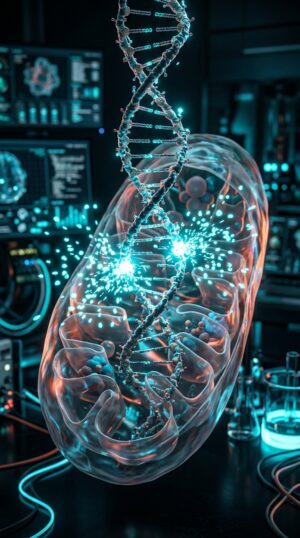
- ATP production: electron transporter between mitochondrial complexes I/II and III; without CoQ10 oxidative phosphorylation collapses.
- Lipophilic membrane antioxidant: It protects mitochondrial phospholipids and LDL lipoproteins from peroxidation.
- Endothelial function: It improves nitric oxide (NO)-dependent vasodilation in peripheral arteries.
- Vitamin E regeneration: It reduces α-tocopheroxyl to active α-tocopherol, expanding the antioxidant network.
- Ubiquinol form: 3–8× more bioavailable than ubiquinone in adults >40 years, at which point endogenous enzyme conversion decreases.
Clinical evidence
Robust evidence
- Heart failure: Mortensen SA et al. (JACC Heart Failure, 2014, Q-SYMBIO trial) — reduction of cardiovascular mortality in class III–IV HF.
- Statin-induced myalgia: Case G et al. (Am J Cardiol, 2007) — reduction of muscle pain in patients treated with statins.
- Superior bioavailability of ubiquinol: Hosoe K et al. (Regul Toxicol Pharmacol, 2007).
Plausible / suggested
- Improvement of ejection fraction in advanced HF (Langsjoen P, Biofactors, 2008).
- Reduction in frequent migraine (small studies).
- Support in male infertility (seminal parameters).
- Improvement of subjective fatigue in fibromyalgia and chronic fatigue syndrome.
Speculative / preclinical
- Neuroprotection in Parkinson's disease (mixed results in humans).
- Modulation of mitochondrial senescence.
Molecular form and bioavailability
He ubiquinol (Reduced CoQ10) requires a specialized manufacturing process to maintain stability. The clinical reference raw material is Kaneka Ubiquinol™, produced by fermentation with yeasts and patented to prevent oxidation.
Bioavailability is 3–8× superior to conventional ubiquinone, especially in those over 40 years of age and in patients with cardiovascular or hepatic dysfunction who have lost conversion capacity. Strictly lipid solubility: requires fatty food For proper absorption. Without fat, bioavailability drops >70%.
Limitations and what it DOES NOT do
- It is not a nootropicThe effect is energetic/cardiovascular, not directly cognitive.
- It does not reverse established structural heart damage—it supports residual function.
- The effect is slow and cumulative; it is not felt for hours.
- In healthy young adults without specific stressors, the marginal benefit is low.
Target population
- Adults >40 years with subjective decline in energy or aerobic capacity.
- Patients on chronic statin therapy (documented drug depletion).
- Moderate heart failure (always as a complement, not a substitute for treatment).
- Master/veteran athletes with declining performance.
- Recurrent migraine as a preventative measure.


Reviews
There are no reviews yet