


THE CASE IVERMECTINONCOLOGICAL PROMISE AND CLINICAL REALITY
From preclinical enthusiasm to pharmacovigilance: what the evidence really says
Few drugs have followed such a unique arc as the ivermectin. Born from Japanese soil in the late sixties, it rose to prominence with a Nobel Prize in 2015 For eradicating parasitic diseases in millions of people, it became a symbol of controversy during the COVID-19 pandemic and is now being touted as a potential cancer treatment. This latest phase is the focus of this dossier.
The scientific narrative contains a central tension. In the laboratory, ivermectin exhibits reproducible, multi-target antitumor properties that have excited researchers worldwide. In the human body, however, it encounters a seemingly insurmountable pharmacokinetic barrier and a near-total absence of clinical trials demonstrating any benefit. Between these two extremes, a torrent of misinformation has taken hold, pushing vulnerable patients toward self-medication.
The purpose of the following pages is to trace the journey of the molecule from the laboratory bench to the (almost) bedside of the patient, carefully separating what is proven from what is extrapolated.
Module 1 — From antiparasitic to oncology candidate: the pharmacokinetic wall

A Nobel Prize-winning and repositioned molecule
Ivermectin is a semi-synthetic derivative of avermectins, macrocyclic lactones discovered in 1967. The work of Satoshi Omura y William C. Campbell it was worth it to them Nobel Prize in Medicine in 2015. Approved for human use by the FDA in 1987, It has treated onchocerciasis (river blindness), strongyloidiasis, lymphatic filariasis and scabies, with billions of doses administered and a wide safety margin at antiparasitic doses.
He drug repositioning —giving new uses to already approved drugs— is an attractive strategy: it saves years of development and is based on a known safety profile. Following this logic, preclinical evidence began to reveal unexpected pleiotropic properties in ivermectin: antiviral, antibacterial, anti-inflammatory, and, notably, antineoplastic.
The plasma ceiling: nanograms versus micromoles
Here the first crack appears. Ivermectin is a bulky molecule (~875 Da) and highly lipophilic (partition coefficient) log P ≈ 5.8), with poor aqueous solubility. At approved antiparasitic doses (0.15–0.2 mg/kg) reaches a plasma peak of the order of ~50 nM. Even pushing doses to the edge of clinical safety (2 mg/kg), the documented peak culminates around ~248 ng/mL. These are nanomolar figures; laboratory antitumor effects require concentrations micromolars, several orders of magnitude higher.
The blood-brain barrier and P-glycoprotein
A second limit is biological. P-glycoprotein (P-gp/MDR1), An efflux pump in the endothelium of the blood-brain barrier actively expels ivermectin from the brain. This shield—absent in the target parasites, which explains its safety in humans—also prevents the drug from accumulating in intracranial tumors such as glioblastoma, except at doses that would be neurotoxic.
Module 2 — Molecular mechanisms: how it attacks the tumor cell (in vitro)
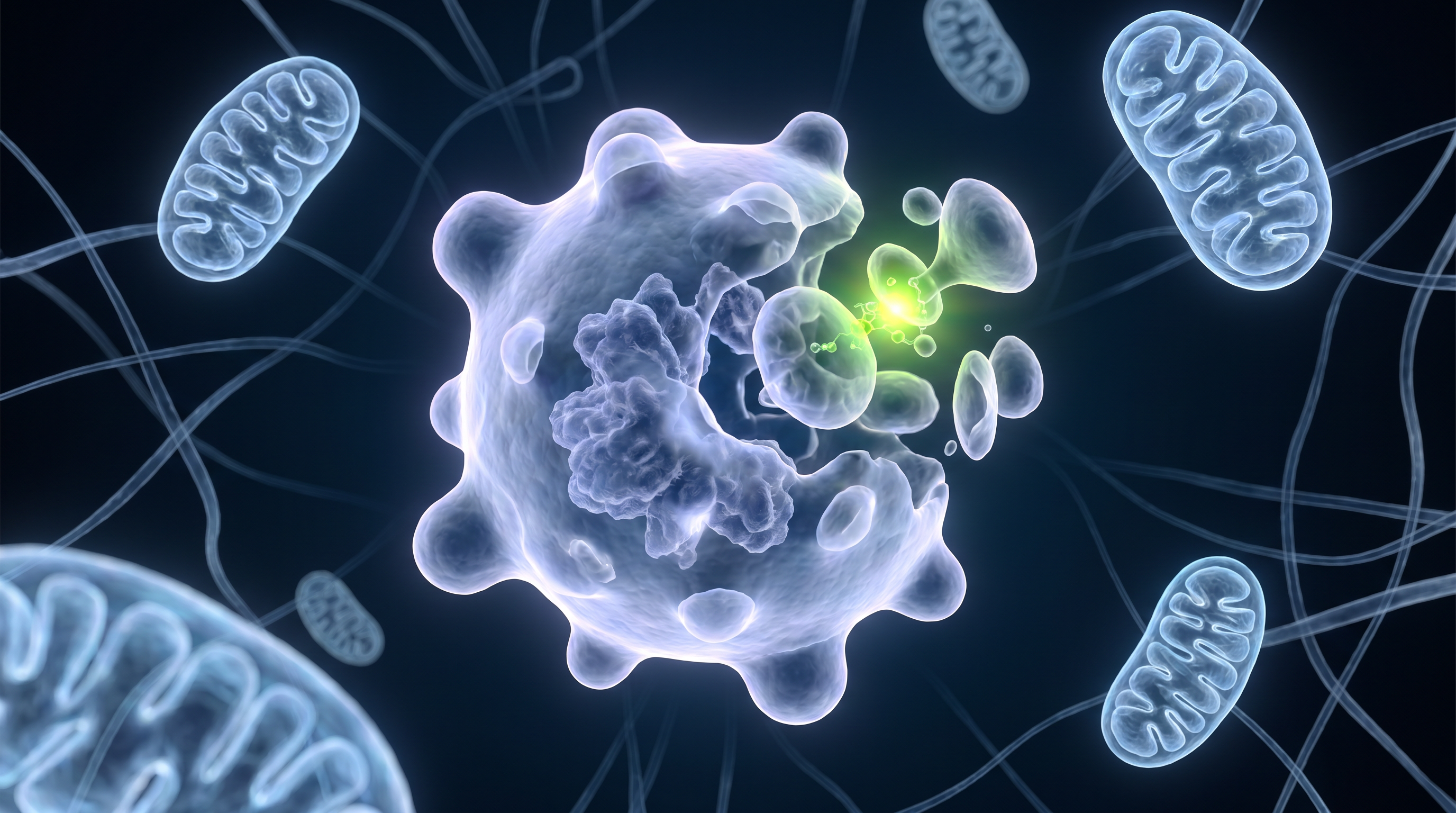
Far from behaving as a non-specific toxin, ivermectin acts on several simultaneous networks. It is worth emphasizing that almost everything that follows comes from models in vitro and of animals.
Signaling pathways and resistance reversal
The molecule inhibits the pathway Wnt/β-catenin (blocking the TCF effector), implicated in colorectal and gastric cancers, and suppresses the axis PI3K/Akt/mTOR, This induces apoptosis and inhibits angiogenesis. One particularly cited finding is that by binding to the extracellular domain of the receptor EGFR and block the ERK/Akt/NF-κB cascade, downregulate P-gp synthesis in the tumor and reverses multidrug resistance, resensitizing tumor cells to chemotherapy drugs such as doxorubicin or paclitaxel.
Mitochondria, hypoxia, and radiosensitization
Ivermectin inhibits the Complex I of the mitochondrial respiratory chain (oxidative phosphorylation), which triggers reactive oxygen species and, by reducing the tumor's oxygen consumption, alleviates tissue hypoxia. Since radiotherapy requires oxygen to repair DNA damage, this reoxygenation could reverse radioresistance in glioma and lung models. The same metabolic shock affects the cancer stem cells, OXPHOS-dependent, suppressing pluripotency regulators such as OCT-4, SOX-2 and NANOG.
From the “cold” tumor to the “hot” tumor”
In triple-negative breast cancer models (murine 4T1 cell line), ivermectin alone barely reduced the tumor, but caused a robust infiltration of T lymphocytes, transforming an immunologically "cold" tumor into a "hot" one and enabling a marked synergy with anti-PD-1/PD-L1 immunotherapy. This is the hypothesis that supports the current clinical trials.
| Diana / Via | Observed effect | Oncological consequence |
|---|---|---|
| Wnt/β-catenin | Inhibition of the TCF effector | Cell cycle arrest (G1/S) |
| PI3K/Akt/mTOR | Akt and mTOR dephosphorylation | Apoptosis; decreased angiogenesis |
| Complex I (OXPHOS) | Inhibition of mitochondrial respiration | Oxidative stress; reoxygenation; radiosensitization; stem cell death |
| EGFR → P-gp | Receptor blockade and drop in P-gp transcription | Reversal of chemoresistance (MDR) |
| Microenvironment (TME) | T lymphocyte recruitment | “Hot” tumor; synergy with anti-PD-1/PD-L1 |
Module 3 — Preclinical efficacy by tumor and synergies

The scrutiny in vitro e in vivo It has a broad spectrum of activity. In digestive tumors (gastric, colorectal, hepatocellular carcinoma), ivermectin inhibits proliferation via the Wnt pathway. In gynecologic oncology, it blocks ovarian cells through importin. KPNB1 and inhibits DNA repair. In hematology, it induces selective cell death in leukemia cell lines (such as K562) through chloride-dependent membrane hyperpolarization, sparing healthy bone marrow precursors. And in lung cancer (NSCLC, H1299 cell line) and metastatic melanoma (B16F10), it inhibits proliferation and dismantles neutrophil extracellular traps (NETs) associated with metastasis.
The likely future: adjuvant, not monotherapy
Modern oncology relies on combination therapies, and evidence suggests that the role of ivermectin, if any, would be to sensitizer. Preclinical synergies have been documented with paclitaxel and cisplatin (ovary), with dasatinib, cytarabine and daunorubicin (leukemias), with statins such as pitavastatin and with recombinant methioninase (rMETase) in pancreatic and colon cancer. The common denominator: simultaneously attacking different metabolic pathways to close off the tumor's escape routes.
The methodological warning is unavoidable: These results are obtained by immersing cells in sustained concentrations of the drug for days, or by injecting mice with doses much higher—proportionally—than those tolerated in humans. Their direct translation to clinical practice is not automatic.
Module 4 — The translational gap and clinical reality

The chasm between the test tube and the patient
The central obstacle is quantifiable. The concentration required for the antitumor effect in vitro is of the micromolar order, while the plasma peak is safe in vivo is nanomolar: a distance of approximately ~100×. This is the same mismatch that undermined the enthusiasm for ivermectin against COVID-19, where the effective dose in culture (5 µM) was about 100 times the peak achievable in blood. Forcibly reaching those concentrations in a person would require doses that would saturate P-gp and overwhelm the blood-brain barrier.
The price of forcing the dose: neurotoxicity
Once that defense is saturated, the molecule enters the central nervous system and disrupts glutamate-dependent chloride channels and GABA, with a clinical picture that may include ataxia, vomiting, seizures, coma, and death. FDA It expressly warns that high doses can cause seizures, coma, or death. This is not theoretical: in 2026, clinicians of Cincinnati Children's Hospital They described a teenager with metastatic bone cancer who, after reading posts on social media, developed ivermectin neurotoxicity and required emergency care.
What the data in humans really shows
Clinical evidence is scarce and, so far, disappointing. In the rural area of Loja (Ecuador), A survey of 48 patients (2020, published in 2023) found that 18,75 % He claimed to be using ivermectin as an alternative cancer therapy; the oncologists consulted did not recommend it and emphasized the lack of scientific basis. The most advanced clinical trial, in the Cedars-Sinai Medical Center (NCT05318469, (phase 1/2), combines ivermectin with immunotherapeutics balstilimab o pembrolizumab in metastatic triple-negative breast cancer. Their preliminary data, presented at ASCO 2025, No significant benefit attributable to ivermectin was shown: of 8 evaluable patients, 6 progressed, and the 2 with some response were also receiving approved immunotherapy, preventing isolation of the macrolide effect. No serious related adverse events were observed among the first 9 treated; full results are expected by the end of [year]. 2026.
The rehearsal takes over. ICONIC (NCT07487805) of the University of Florida: phase 2, randomized, with 80 patients, which will compare high-dose versus intermediate-dose ivermectin added to a checkpoint inhibitor in solid tumors. In parallel, the NCI confirmed at the beginning of 2026 a study preclinical (non-clinical) on the molecule's ability to destroy cancer cells; its director, Anthony Letai, He tempered expectations: “At the population level, it’s not going to be a universal cure.” The state of Florida advertisement $60 million to investigate the drug.
| Initiative | Guy | State / Result |
|---|---|---|
| Cedars-Sinai (NCT05318469) | Phase 1/2 trial, ivermectin + immunotherapy, TNBC | No significant benefit in preliminary data (ASCO 2025); final results in 2026 |
| ICONIC (NCT07487805) | Phase 2 trial, 80 patients, solid tumors | Starting recruitment (2026) |
| NCI | Preclinical study (laboratory) | Ongoing; results announced “in a few months” |
| Loja, Ecuador | Observational survey (48 patients) | 18.75 % self-reported use; no clinical validation |
Balance / Conclusions
First, The preclinical signal is real and reproducible. Ivermectin acts on multiple legitimate tumor targets (Wnt, PI3K/Akt/mTOR, mitochondrial complex I, EGFR/P-gp), and its antitumor biology in culture and mice is solidly documented. It's not laboratory hype.
Second, This signal encounters a pharmacokinetic barrier that remains unresolved. The distance of ~100× among the effective concentrations in vitro and safe plasma levels in vivo This is, right now, the real bottleneck; forcing the dose to save it leads to neurotoxicity.
Third, Clinical evidence in humans is minimal and, so far, has not shown any benefit. The only trial with preliminary data found no benefit attributable to the drug; there is documented harm from self-medication; and virtually all institutions (FDA, NCI, DISGUST) advises against its use outside of trials. Of more than 20.000 Publications on ivermectin and cancer, the vast majority are preclinical.
Room, The rational path is rigorous research, not self-medication. The Cedars-Sinai, ICONIC, and NCI trials should clarify within one or two years whether the molecule has a real role—likely as an adjuvant—or whether it joins the long list of drugs that showed promise in the test tube but failed in practice. Until then, documentary prudence dictates separating the promise from the evidence.
Selected references
- Tang M., Hu X., Wang Y., et al. (2021). Ivermectin, a potential anticancer drug derived from an antiparasitic drug. Pharmacological Research, 163:105207. (PMC7505114)
- Juarez M., Schcolnik-Cabrera A., Dueñas-Gonzalez A. (2018). The multitargeted drug ivermectin: from an antiparasitic agent to a repositioned cancer drug. American Journal of Cancer Research, 8(2):317–331. (PMC5835698)
- Nappi L., et al. (2022). Ivermectin: a multifaceted drug with a potential beyond anti-parasitic therapy. Cureus. (PMC11008553)
- Liang Y., et al. (2020). Progress in understanding the molecular mechanisms underlying the antitumor effects of ivermectin. (PMC6982461)
- Jiang L., et al. (2019). Ivermectin reverses the drug resistance in cancer cells through EGFR/ERK/Akt/NF-κB pathway. Journal of Experimental & Clinical Cancer Research. (PMC6580523)
- Dominguez-Gomez G., et al. (2020). Targeting tumor hypoxia and mitochondrial metabolism with anti-parasitic drugs to improve radiation response in high-grade gliomas. (PMC7542384)
- (2025). Ivermectin as an alternative anticancer agent: a review of its chemical properties and therapeutic potential. Pharmaceuticals (MDPI), 18(10):1459. (PMC12566834)
- Gonzalez P., et al. (2023). Outcome of ivermectin in cancer treatment: an experience in Loja-Ecuador. Nursing Reports, 13(1). (PMC10054244)
- (2026). Real-world clinical outcomes of ivermectin and mebendazole in cancer patients. Anticancer Research, 46(6):3243.
- Yuan Y., et al. (2025). A phase I/II study evaluating the safety and efficacy of ivermectin in combination with balstilimab in patients with metastatic triple negative breast cancer. Journal of Clinical Oncology, 43(16_suppl):e13146 (ASCO).
- ClinicalTrials.gov. Ivermectin in combination with balstilimab or pembrolizumab in patients with metastatic TNBC. NCT05318469.
- ClinicalTrials.gov / University of Florida. Ivermectin combined with immune checkpoint inhibition in cancer (ICONIC). NCT07487805.
- Pradhan R. (2026). US Cancer Institute studying ivermectin's 'ability to kill cancer cells'. KFF Health News/STAT, February 10.
- The Cancer News Team (2026). What cancer doctors are saying about ivermectin and cancer treatment. Binaytara Foundation.
- Mark N. (2021). Debunking ivermectin: a complete guide (review of the IC50/Cmax pharmacokinetic gap). ICU One Pager.