


HEBERSaVaxTHE CUBAN CANCER VACCINE THAT BREAKS THE PARADIGM OF BEVACIZUMAB
Active anti-VEGF immunotherapy, dual mechanism and 32 months of survival in advanced ovary syndrome
Advanced ovarian cancer kills most patients diagnosed within three years of diagnosis. It is one of the grimtest prognoses in contemporary gynecological oncology. That is why when a phase II trial reports a median overall survival of 32.82 months, It is worth reading how that number was reached and, above all, what makes the drug that produced it different.
The drug is called HEBERSaVax (development code) CIGB-247and it didn't come from a laboratory in Boston, Basel, or Cambridge. It came from Center for Genetic Engineering and Biotechnology (CIGB) of Havana, Cuba, after more than a decade of research led by the Dr. Yanelys Morera Díaz, under the clinical direction of Dr. Francisco Hernández Bernal. It is not a monoclonal antibody nor a tyrosine kinase inhibitor. It is a therapeutic vaccine: an active immunotherapy that teaches the patient's body to produce its own antibodies against the vascular endothelial growth factor (VEGF), the protein that tumors hijack to build their blood supply network.
This post is not a pamphlet. It's a technical review of what the... papers published data, clinical trial registries, and active patents in 11 jurisdictions (including the United States, the European Union, China, and Japan). The goal is to understand why a Cuban team, with a limited budget, is accumulating clinical data that rivals the Western gold standard for cancer treatment: the bevacizumab.
Module 1 — How it works: the dual anti-VEGF mechanism
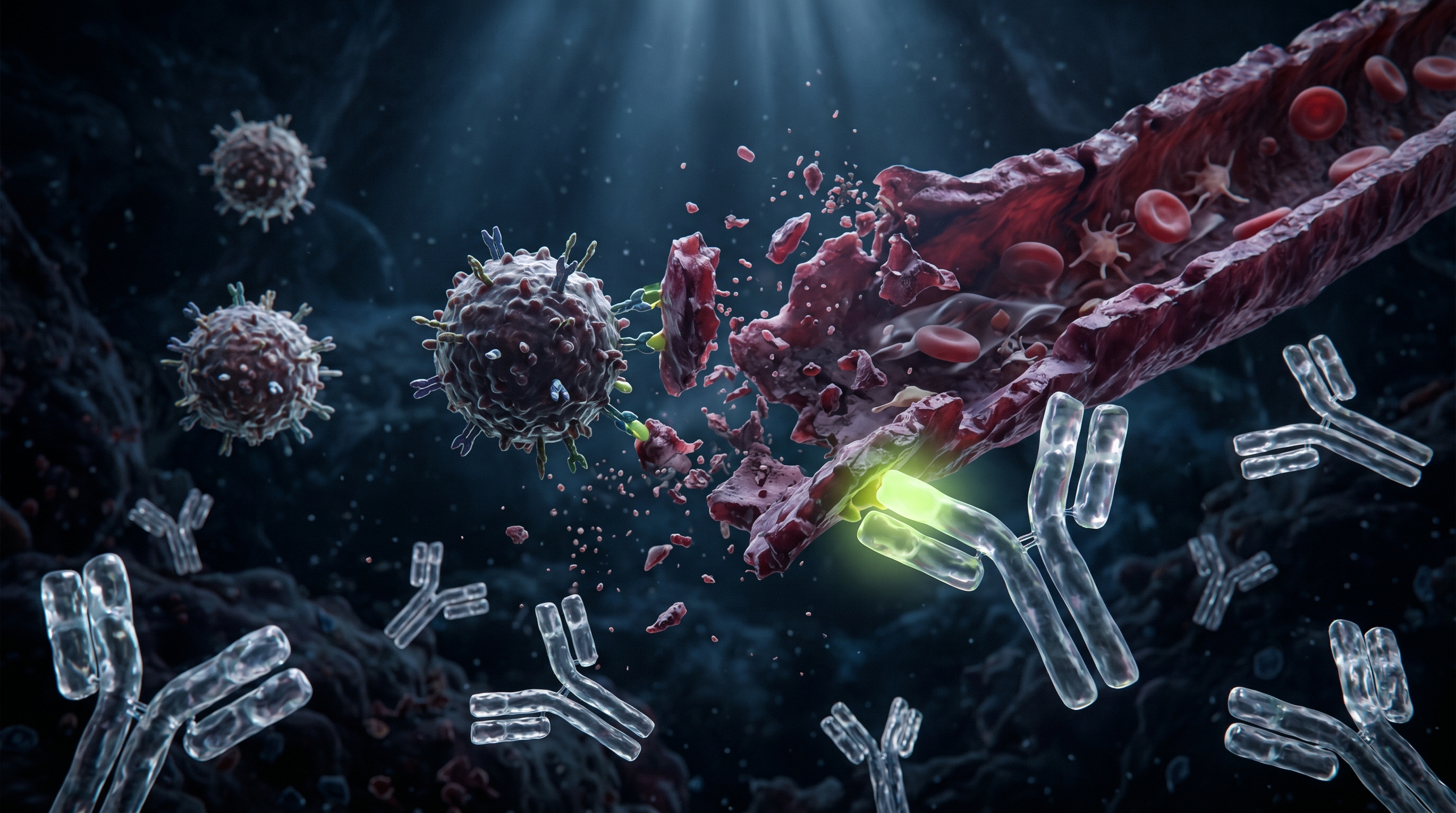
Tumor angiogenesis, in a sentence
Solid tumors cannot grow beyond 1-2 millimeters without building their own network of blood vessels. To do this, they secrete large amounts of VEGF, a signaling protein that acts on receptors VEGFR1 y VEGFR2 (KDR) of endothelial cells and induces them to proliferate, forming new capillaries. Without VEGF, there is no tumor angiogenesis. And without tumor angiogenesis, the tumor is deprived of oxygen and nutrients.
The classic clinical problem is that VEGF doesn't just build blood vessels: it also suppresses the local immune system. It blocks the maturation of dendritic cells, recruits tumor suppressor cells (MDSCs), and expands regulatory T lymphocytes (Tregs). By overproducing VEGF, the tumor creates an immune force field around itself that prevents cytotoxic T lymphocytes from doing their job.
HEBERSaVax's double front
This is what changes with Cuban active immunotherapy. When a patient receives HEBERSaVax, their own immune system begins to produce two things at once.
On the one hand, specific B cells that release torrents of polyclonal antibodies against multiple epitopes of circulating VEGF. Unlike a synthetic monoclonal antibody that recognizes a single site, polyclonal antibodies attack the protein from multiple angles at once, neutralizing it in the serum before it can bind to VEGFR2. The result documented in preclinical biopsies: 44% drop in tumor proliferation (Ki67 marker), drastic reduction of microvessel density (CD31+), loss of pericyte support (α-SMA+).
On the other hand, the vaccine induces a response cytotoxic cell lymphocyte-mediated T CD8+. These lymphocytes, trained by the patient's spleen and lymph nodes, go out to hunt down and destroy the tumor stromal cells that are producing VEGF. It is not enough to neutralize VEGF in the blood; the factories that produce it must be eliminated. This is what no monoclonal antibody can do.
There is a fascinating therapeutic side effect: by temporarily normalizing the tumor's vascular network, the vaccine also opens a normalization window which facilitates the entry of CD4+ and CD8+ T lymphocytes into the tumor nucleus. HEBERSaVax doesn't just attack: it also invites the rest of the immune system to join the party.
Module 2 — Molecular Engineering
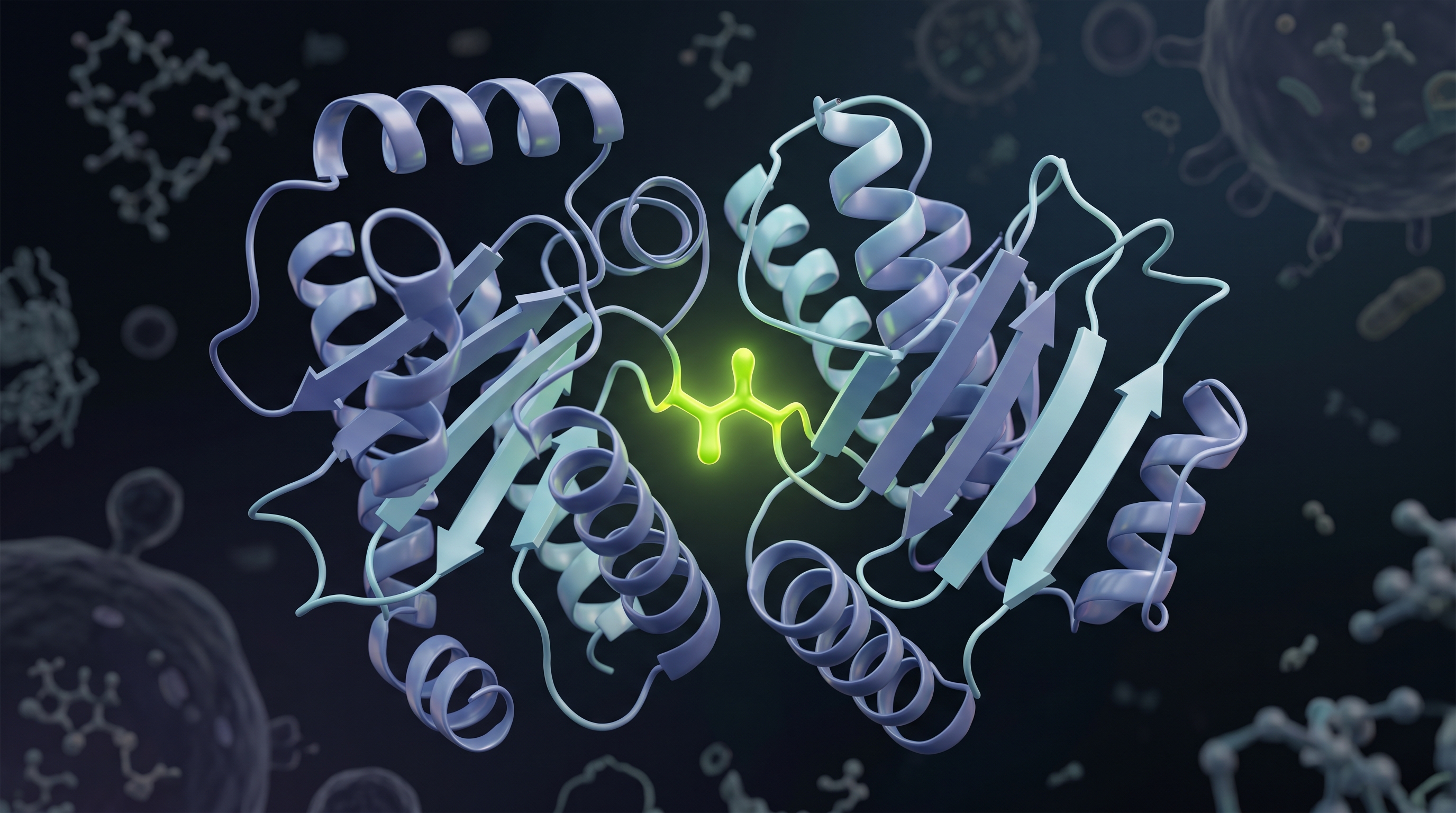
The CIGB-247 antigen and the His86→Glu mutation
Here's the technical problem the CIGB team had to solve: VEGF is a protein naturally found in the human body. Injecting functional VEGF as a vaccine would be suicidal—it would stimulate angiogenesis and accelerate tumor growth. So how do you design a protein that is recognized by the immune system but doesn't do what natural VEGF does?
The answer was a subtle but surgical genetic re-engineering. The pharmacological core of HEBERSaVax is a recombinant variant of the human isoform. VEGF121, produced in bacterial fermentation systems (allowing for scalable manufacturing). This protein was then introduced three amino acid substitutions, the most critical being the mutation His86 → Glu: histidine at position 86 was replaced by glutamic acid.
The biological effect is categorical. This substitution changes the three-dimensional conformation of the receptor-binding domain and completely abrogates the antigen's ability to bind to VEGFR1 y VEGFR2. The CIGB-247 antigen is inert In terms of pro-angiogenic signaling: it doesn't stimulate endothelial proliferation, it doesn't feed the tumor. But it preserves intact the epitopes that the immune system needs to recognize. It's the difference between a key that opens a door and a deformed key that no longer fits but that the immune system still identifies as a key.
The adjuvant transition
A therapeutic vaccine is not just the antigen. It is the antigen plus a adjuvant. For years, the CIGB used the Very Small Proteoliposome (VSSP), derived from modified membrane Neisseria meningitidis, which in murine models induced a more potent Th1-type response.
But the VSSP is complex, difficult to scale, and unfamiliar to regulators. When the project needed to be scaled to phases II and III, the team migrated to Aluminum Phosphate (AP), pre-approved by the FDA. Human trials revealed that the immunogenic differences between VSSP and AP were marginal. What dictated the strength of the response was not the adjuvant, but the escalation to 800 µg antigen. That discovery simplified manufacturing and paved the way for international regulation.
Module 3 — Clinical data: the CENTAURO program

From phase I to phase II: the chronology
The CIGB clinical trials program is named after CENTAUR. The following table summarizes the most relevant published phases.
| Phase | Population | Dosage and adjuvant | Key finding |
|---|---|---|---|
| CENTAUR (Phase I) | 30 patients with advanced refractory solid tumors | Escalation 50 → 100 → 400 µg with VSSP | Systemic safety confirmed. Dose-response correlation via ELISPOT. |
| CENTAURO-2 (Phase Ib) | Expanded cohorts | 200 → 400 → 800 µg, VSSP vs AP | Validation of 800 µg as the optimal dose. Equivalent tolerance between adjuvants. |
| CENTAURO-4 (Phase II) | 40 patients with advanced epithelial ovarian cancer | 800 µg + chemotherapy (carboplatin/paclitaxel) | Median PFS: 18 months. Median OS: 32.82 months. Adverse effects grade 1-2 local. |
| CENTAURO-6 (Phase II) | Hepatocellular carcinoma | 800 µg under hospital conditions | Ongoing at CIMEQ in Havana. Reductions in liver tumor activity reported. |
32.82 months: the figure that rewrites the forecast
The number that matters is in the CENTAURO-4 row. To understand why this is relevant, it needs to be put into context: advanced epithelial ovarian cancer with suboptimal surgery or unresectable disease historically has a median overall survival of 20 to 24 months with standard treatment (chemotherapy + bevacizumab). To reach 32.82 months Adding subcutaneous injections of very low toxicity places HEBERSaVax at a clinical level clearly superior to the standard.
The study was published in a peer-reviewed journal (PubMed 41099583) after six years of follow-up. The median PFS was 18 months, and the OS was 32.82 months. Adverse events were limited to grade 1-2 local injection site reactions—nothing comparable to the refractory hypertension, bleeding, and gastrointestinal perforations documented with conventional bevacizumab.
In it Compassionate Use Program (CUP) approved by CECMED, real-world practice data confirmed the findings: polyclonal production of IgM, IgA, and IgG specifically directed against VEGF, without cross-reactivity with other isoforms (VEGF-C, VEGF-D). In long-term survivors, a class-switching from IgG1 to IgG4, the molecular hallmark of an immunological memory that confers sustained protection.
Module 4 — HEBERSaVax vs Bevacizumab

Passive immunity versus active immunity
He bevacizumab (trade names) Avastin, Mvasi, Zirabev) is the global standard for VEGF blocking. It works, but it belongs to the paradigm of passive immunityThe patient receives intravenous infusions of monoclonal antibodies manufactured in industrial bioreactors. Plasma levels are extremely high, effectively neutralizing circulating VEGF, but they also damage healthy endothelium. Hence the range of toxicities: severe hypertension, hemorrhage, renal dysfunction, and intestinal perforation.
HEBERSaVax establishes the opposite paradigm: active immunity modulated and persistent. The patient does not receive the finished antibody; they receive the modified antigen that teaches their own body to produce it. The result is endogenous secretion. metronomic, sustained, at low concentrations but with high affinity.
| Variable | Bevacizumab | HEBERSaVax |
|---|---|---|
| Mechanism | Passive immunity: exogenous antibody | Active immunity: polyclonal antibodies + CD8+ T cells |
| Via | Hospital intravenous infusion | Outpatient subcutaneous injection |
| Kinetics | High peaks and rapid falls | Levels sustained for months |
| Epitopes | One (monoclonal) | Multiple (polyclonal) |
| Action on VEGF producers | None | Active cytotoxicity via CD8+ T cells |
| Toxicity | Hypertension, hemorrhages, GI perforations | Local reactions grade 1-2 |
| Cost | Tens of thousands of USD per cycle | Scalable bacterial fermentation |
There is one piece of experimental data that deserves to be highlighted: the trials in vitro Using serum from vaccinated patients, they demonstrated that endogenously generated antibodies They compete for the same VEGF domains which bevacizumab attacks, and even completely inhibit The ability of bevacizumab to bind to its target when mixed. The natural immune machinery activated by the vaccine produces antibodies that match the affinity of those created in the laboratory.
Patents and global access
The CIGB secured a worldwide monopoly on CIGB-247 technology through a dossier of patents active until June. 2032 in: European Union (EPO), USA (USPTO), Canada, Mexico, Japan, South Korea, China, Russian Federation, Australia y South Africa. The Technology Innovation Agency South Africa has already documented the bilateral Cuba-South Africa collaboration for local production.
Balance
First, The published clinical data are robust for their category. CENTAURO-4 is a phase II trial, n=40, with six years of follow-up and publication in a peer-reviewed journal. It is not a phase III trial, it does not have FDA or EMA approval, and that should be made clear. But the 32.82 months Median overall survival in a cancer population with a very poor prognosis is not a minor fact.
Second, Molecular design is elegant. Mutation His86 → Glu It solved the central technical problem of how to vaccinate against a self-protein without triggering iatrogenic effects. The transition from the VSSP adjuvant to aluminum phosphate resolved the logistical problem of scalability. These are engineering decisions that a team with a limited budget had to make with particular rationality, and the data suggest that they made them well.
Third, The contrast with bevacizumab is not merely rhetorical. HEBERSaVax is subcutaneous (not IV), polyclonal (not monoclonal), has a dual mechanism of action (antibodies + cytotoxic T cells), exhibits a toxicity profile limited to grade 1-2, and is produced by scalable bacterial fermentation. If the phase II data are replicated in phase III, the cost-benefit analysis for public health systems in the Global South and Europe changes radically.
Room, A sober reading. This is not a declaration that the Cuban vaccine “cures cancer.” No serious researcher at the CIGB makes that claim. What is documented is that a dual-pathway active immunotherapy, developed outside the traditional pharmaceutical system, is accumulating clinical evidence that fully justifies advancing to a multicenter, international Phase III trial. For patients with advanced ovarian, hepatocellular, colorectal, and renal cancer, the mere possibility of incorporating HEBERSaVax into the treatment algorithm deserves sustained attention. The dossier is open, and the data continues to arrive.
Selected references
- Hernández-Bernal F, et al. (2026). HEBERSaVax immunotherapy combined with first-line chemotherapy in advanced ovarian cancer: Phase II CENTAURO-4 trial results. PubMed 41099583.
- Morera Y, et al. (2026). Anti-VEGF immunotherapy with HEBERSaVax suppresses melanoma growth and metastasis. Frontiers in Immunology / PMC12757277.
- Morera Y, et al. (2026). Longitudinal Assessment of an 800 µg Dose of HEBERSaVax in Non-Human Primates. MDPI Vaccines 14(3):230.
- Gavilondo JV, Hernández-Bernal F, et al. Specific active immunotherapy with the HEBERSaVax VEGF-based cancer vaccine: From bench to bedside. PubMed 30318086.
- Morera Y, et al. (2012). CIGB-247: a VEGF-based therapeutic vaccine that reduces experimental and spontaneous lung metastasis. PubMed 22240345.
- Hernández-Bernal F, et al. (2014). Specific active immunotherapy with a VEGF vaccine in patients with advanced solid tumors. CENTAURO phase I. PubMed 24530151.
- Pérez-Sánchez L, et al. (2020). Specific humoral response in cancer patients treated within a compassionate use program. PMC 7071683.
- CIMEQ. CENTAURO-6 Study — Hepatocellular Carcinoma. RPCEC00000237.
- SciELO Cuba (2022). New contributions to the study of immunological effectors induced with CIGB-247.
- Granma (May 2026). HEBERSaVax: The story of a Cuban product unique in the world.
- Radio Angulo (May 2026). Cuba Showcases Results of HEBERSaVax Cancer Vaccine Candidate.
- Technology Innovation Agency South Africa (2025). South Africa-Cuba Biotechnology Collaboration.
- CIGB. HEBERSaVax product profile. cigb.edu.cu.
- Morera Y, et al. Experimental studies of a vaccine formulation of recombinant human VEGF. Tandfonline 10.1080/21645515.2015.1029213.