


GLUCOSAMINE: THE PARADOX ALZHEIMER'S
A double-edged amino sugar: a shield in the healthy brain, a trigger once neurodegeneration has begun
For decades, Alzheimer's disease was interpreted almost exclusively as a problem of protein aggregation: beta-amyloid plaques on the outside of the neuron and tangles of hyperphosphorylated Tau protein on the inside. The limited effectiveness of drugs aimed at clearing these proteins has pushed neurobiology toward a different framework, one that reconceptualizes dementia as a systemic metabolic failure —what some colloquially call “type 3 diabetes”— in which glucose dysregulation, mitochondrial dysfunction, and chronic neuroinflammation precede cognitive decline by decades.
Within this context of metabolic vulnerability, an over-the-counter supplement consumed by around 40 million adults Only in the United States: glucosamine, an amino sugar naturally present in cartilage and routinely used to treat joint pain from osteoarthritis. Its reputation had been one of almost universal safety. A study by the University of Florida (UF), led by researchers Ramon Sun y Matt Gentry and published in Nature Metabolism in June 2026, It challenges that perception by linking its consumption, in people who already show signs of neurodegeneration, with an accelerated progression towards dementia and with an increase in mortality.
Module 1 — The medical record: 65,000 medical histories

Data mining instead of trials
To circumvent the ethical dilemmas of administering a suspect compound to frail patients, the team did not resort to a prospective trial, but rather to advanced real-world data mining. Using artificial intelligence and natural language processing algorithms, they retrospectively analyzed the electronic health records (EHRs) of the system. UF Health between 2012 and 2024, extracting information from both clinical notes and prescription and supplementation records.
The study encompassed more than 65,000 patients distributed into two cohorts. The first brought together 41.884 people with Mild Cognitive Impairment (MCI), a prodromal state in which progression to dementia is not inevitable and a percentage of patients remain stable for years. The second encompassed 24.481 patients with Alzheimer's disease and related dementias (ADRD), that is, brains with already active degeneration. In both groups, close to the 8% maintained a documented glucosamine regimen: 2.750 patients in the MCI group and 1.896 in the ADRD group. Extrapolating that prevalence to the nearly 7 million Americans living with Alzheimer's, the authors estimate that between half a million and one million vulnerable patients may be consuming the compound.
Divergent trajectories based on prior damage
With 5- and 10-year survival analysis models, adjusted for age, biological sex, and other demographic covariates, and a mean follow-up of 1,835 days, The results depended on the degree of pre-existing brain damage. Among patients with mild cognitive impairment (MCI), regular glucosamine use was associated with an increase in 25% in the probability of progressing to a diagnosis of Alzheimer's type dementia (P < 0.001). In the cohort with established dementia, exposure was associated with an increase in 25% in the risk of all-cause mortality over ten years (P = 0.0023).
The most revealing piece of information from a biological point of view was a absence: glucosamine No significantly altered mortality in the MCI group (P = 0.252This lack of lethality in the prodromal stage suggests that the compound does not act as a universal toxin that indiscriminately kills neurons, but rather exacerbates a metabolic defect that is fully expressed only when neuronal networks have already entered a phase of active degeneration.
| Cohort | Patients | Use of glucosamine | Progression to dementia | Mortality (10 years) |
|---|---|---|---|---|
| Mild Cognitive Impairment (MCI) | 41.884 | 2.750 (8,0%) | +25% (P < 0.001) | No difference (P = 0.252) |
| Alzheimer's and Dementia (ADRD) | 24.481 | 1.896 (7,7%) | Not applicable (already established) | +25% (P = 0.0023) |
Table 1. Longitudinal dynamics of the impact of glucosamine supplementation extracted from UF Health electronic medical records.
Module 2 — The molecular machinery: from sugar to synaptic damage
How it gets in: the blood-brain barrier
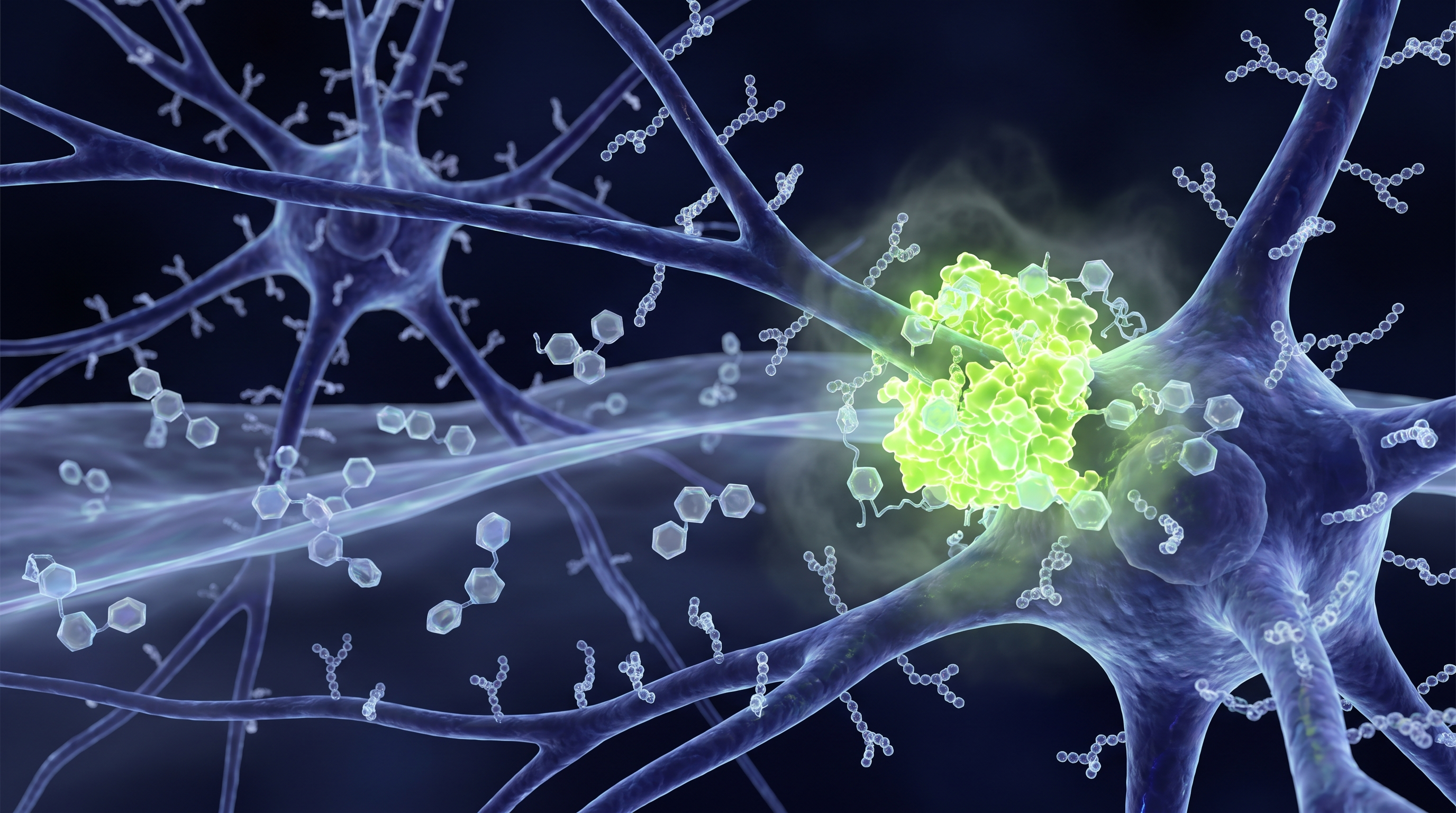
To influence the brain, glucosamine must first cross the blood-brain barrier, and as a polar molecule, it is entirely dependent on glucose transporters (GLUT family). GLUT1 It acts as a sentinel of the barrier. Once inside, the astrocytes use the GLUT2, which despite having a low affinity for glucose shows an exceptional affinity for glucosamine (Km = 0.8 mM), and the neurons resort to GLUT3, the one with the greatest transport capacity. The result is that, when blood concentrations rise after supplementation, the amino sugar is massively internalized into nerve tissue.
The metabolic shunt: the hexosamine pathway
Within the neuron, the fate of glucosamine differs from that of glucose. Under normal conditions, only between the 2% and 5% glucose is diverted to Hexosamine Biosynthesis Pathway (HBP), whose entry is strictly controlled by the rate-limiting enzyme GFAT. The problem is that exogenous glucosamine, when directly phosphorylated by hexokinase, completely bypasses that checkpoint and floods the pathway with unlimited substrate, forcing the overproduction of UDP-GlcNAc, the universal donor of sugars for cellular glycosylation.
The hyperglycosylation signature
To see that excess in the tissue, Sun's lab applied imaging mass spectrometry (MALDI-MSI), optimized with iterative xylene washes that multiplied between 10 and 20 times the N-glycan signal. The result was an unmistakable signature in the frontal cortex of Alzheimer's patients compared to age-matched controls: a massive hyperglycosylation, with a high abundance of high mannose glycans (species m/z 1.419, 1.581 and 1.905) and bisecting (m/z 1,688) in the cortex, hippocampus, and thalamus. And critically, the concentration of these sugars escalated in direct proportion to the severity of the damage, as measured by the Braak stadium. Isotopic tracing confirmed that the excess came from overactive biosynthesis, not from a failure in depuration.
More than 90–95% The affected glycoproteins are the same as in a healthy brain: the defect is not in that The proteins themselves are modified, but the magnitude of the labeling is affected. This excess destabilizes the networks involved in the disease. It alters the trafficking of the amyloid precursor protein (APP), diverting it towards compartments rich in the enzyme BACE1 and favoring the amyloidogenic pathway that generates plaques; it aggravates the dissociation of Tau of microtubules; and compromises ion channels and vesicle recycling, progressively silencing neuronal communication. In mouse models (5xFAD y PS19), silencing glycosylation enzymes restored memory, while administering oral glucosamine exacerbated deficits to the point of near-total failure on social recognition tests.
Module 3 — The paradox: a shield in the healthy, a trigger in the sick
The support of the UK Biobank
The revelation clashes with a body of previous literature that argued precisely the opposite. The analyses of UK Biobank —a prospective study of more than 500,000 participants British researchers, using strict exclusion criteria to eliminate baseline dementia, had associated glucosamine with a reduced risk of dementia in healthy individuals. Using propensity score matching (52.525 users versus an equal number of non-users) and Cox models with tracking 8.9 to 13.8 years, The data showed a lower risk of major dementias.
| Neurodegenerative condition | Hazard Ratio (HR) | IC 95% | Risk reduction |
|---|---|---|---|
| Dementia from all causes | 0,84 | 0,75 – 0,93 | 16% less |
| Alzheimer's disease | 0,83 | 0,71 – 0,98 | 17% less |
| Vascular dementia | 0,74 | 0,58 – 0,95 | 26% minor |
Table 2. UK Biobank data (prior to 2026) in cognitively intact adults at baseline.
The protective phenotype extended to all-cause and cardiovascular mortality (reductions of between the 15% and 39%), and a design of Mendelian randomization This suggested that the protection was not merely an artifact of the "healthy user." As a side note, the supplement appeared to increase the risk of atrial fibrillation by a certain amount. 51% in those under 65 years of age, which already suggested a phenotype-dependent response.
Caloric restriction mimicry
Sun and Gentry resolve the paradox with a framework of homeostatic differentiation. In the healthy brain, with intact metabolic buffering systems, glucosamine primarily induces cytoplasmic modifications (O-GlcNAcylation) with anti-inflammatory effect —suppresses the pathway NF-κB— and acts almost like a calorie restriction mimetic, prolonging cell life. In the Alzheimer's brain, however, metabolic resilience has collapsed and the sugar-labeling system is permanently activated. Providing glucosamine at that point, in the authors' words, is equivalent to to throw fuel on a molecular fireThe substrate evades the controls and floods an irreversibly hyperactive hexosamine pathway.
Criticism: cause or shadow?
The epidemiological component received notable resistance from the industry. Dr. Daniel Fabricant, of the Natural Products Association (NPA), and the Dr. Jacob Teitelbaum They pointed out a possible confounding bias. Those who take glucosamine usually do so for painful osteoarthritis, and the chronic pain is independently associated with up to one 43% plus risk of dementia due to the sustained allostatic stress it generates. Under that interpretation, the glucosamine recorded in the records would be a proxy of the underlying damage, not its cause. The NPA adds that the model also failed to adjust for the ultra-processed diet or the advanced glycation end products (AGEs), abundant in this population. Sun acknowledged the need for trials, but ruled out administering the compound to patients after detecting the mortality signal; his laboratory proposes instead a “randomized withdrawal trial”, to discontinue the supplement in users with MCI to measure whether it slows the decline slope.
Module 4 — The gut-brain axis: the systemic root
From dysbiosis to neuroinflammation
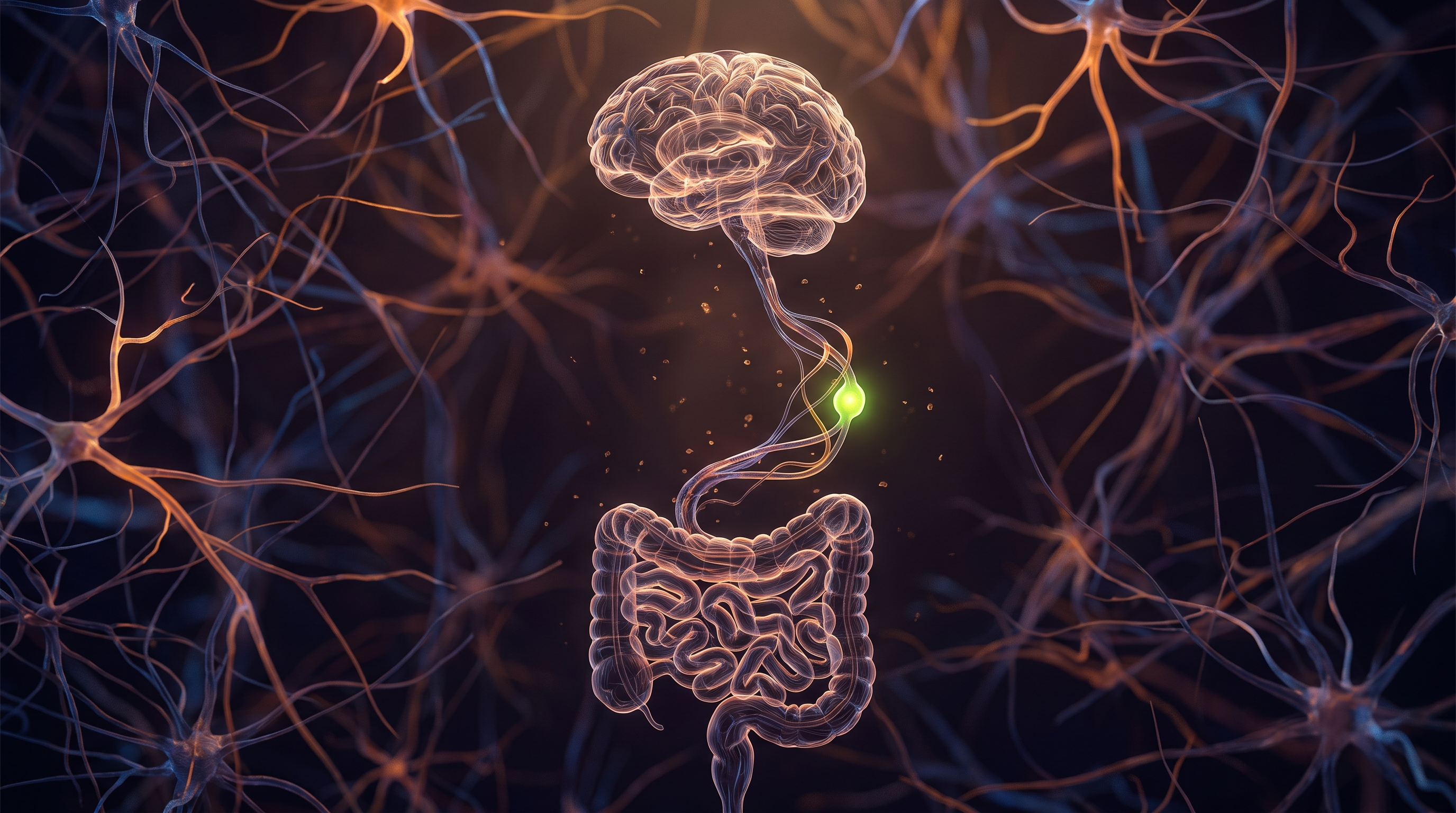
The damage observed in the cortex is, to a large extent, the terminal phase of a peripheral process that begins in the gut. The metabolic syndromes that precede dementia—obesity, insulin resistance, dyslipidemia—generate dysbiosisThe synthesis of short-chain fatty acids (SCFAs, such as butyrate and propionate), essential to maintain the integrity of both the intestinal epithelium and the blood-brain barrier itself.
With the erosion of that epithelium (leaky gut), the lipopolysaccharides (LPS) from gram-negative bacteria translocate into the circulation and trigger a metabolic endotoxemia low-grade. That surge of LPS chronically activates the receptors. TLR4 and the way NF-κB, releasing cytokines —IL-1β, IL-6 y TNF-α—which penetrate an already weakened barrier and inflame the microglia. In that environment, protective genes such as TREM2 They are inhibited, reducing the glial cells' ability to clear amyloid. When glucosamine enters this pro-inflammatory scenario, the metabolic buffer fails and the dual storm is triggered: central inflammation combined with proteotoxic hyperglycosylation.
Balance / Conclusions
First, The finding describes a dependence, not a universal toxicity. Glucosamine did not increase mortality in the early stages of mild cognitive impairment (MCI), but it did accelerate progression and mortality once neurodegeneration was active. The damage depends on the metabolic environment it encounters.
Second, The mechanistic plausibility is strong. Spatial omics documented the hyperglycosylation signature scaling with the Braak stage, and mouse experiments showed causality in both directions: silencing glycosylation restored memory; adding glucosamine impaired it.
Third, However, the limitations are real and should not be minimized. The epidemiological arm is retrospective and did not adjust for significant variables such as chronic pain or dietary AGE burden. Causality in humans has not been demonstrated and remains pending the proposed withdrawal trial.
Room, The practical interpretation is one of caution. In cognitively healthy adults, the available evidence continues to lean toward a neutral or protective profile. In individuals with mild cognitive impairment or established dementia, the risk-benefit balance changes, and any decision regarding supplementation should be made under medical supervision. This dossier documents a safety signal; it does not issue a verdict.
Selected references
- Sun R, Gentry M, et al. (2026). Hyper-Glycosylation as a Central Metabolic Driver of Alzheimer's Disease. Nature Metabolism (bioRxiv preprint/PubMed 40654813).
- Ma H, et al. (2023). Association of regular glucosamine use with incident dementia: evidence from a longitudinal cohort and Mendelian randomized study. BMC Medicine (PMC10052856).
- Li Z, et al. (2023). Habitual glucosamine use, APOE genotypes, and risk of incident cause-specific dementia in the older population. (PMC10492372).
- Szablewski L. (2021). Brain Glucose Transporters: Role in Pathogenesis and Potential Targets for the Treatment of Alzheimer's Disease. (PMC8348194).
- Koepsell H. (2020). Glucose transporters in brain in health and disease. Pflügers Archive (PMC7462931).
- Conroy LR, et al. (2021). Emerging roles of N-linked glycosylation in brain physiology and disorders. (PMC8589112).
- Kizuka Y, et al. (2022). In situ spatial glycomic imaging of mouse and human Alzheimer's disease brains. (PMC9198106).
- Frontiers in Aging Neuroscience (2025). Integrated analysis of N-glycosylation and Alzheimer's disease: identifying key biomarkers and mechanisms. doi:10.3389/fnagi.2025.1597511.
- PMC (2021). Glucosamine and Its Analogues as Modulators of Amyloid-β Toxicity. (PMC8040036).
- PMC (2023). Unlocking the Sugar Code: Implications and Consequences of Glycosylation in Alzheimer's Disease and Other Tauopathies. (PMC12730515).
- PMC. The impact of nutritional and exercise interventions on Alzheimer's disease pathophysiology via modulation of the microbiota-gut-brain-axis. (PMC12643020).
- PMC (2019). The gut microbiota to the brain axis in the metabolic control. (PMC6938794).
- Vitamin Retailer (2026). Industry Criticizes Study on Glucosamine Supplements and Alzheimer's Disease.
- Natural Products Association (2026). NPA Responds To Study On Glucosamine Supplements, Alzheimer's.
- University of Florida News (2026). Study links joint pain supplement to accelerating dementia. UF Health.