
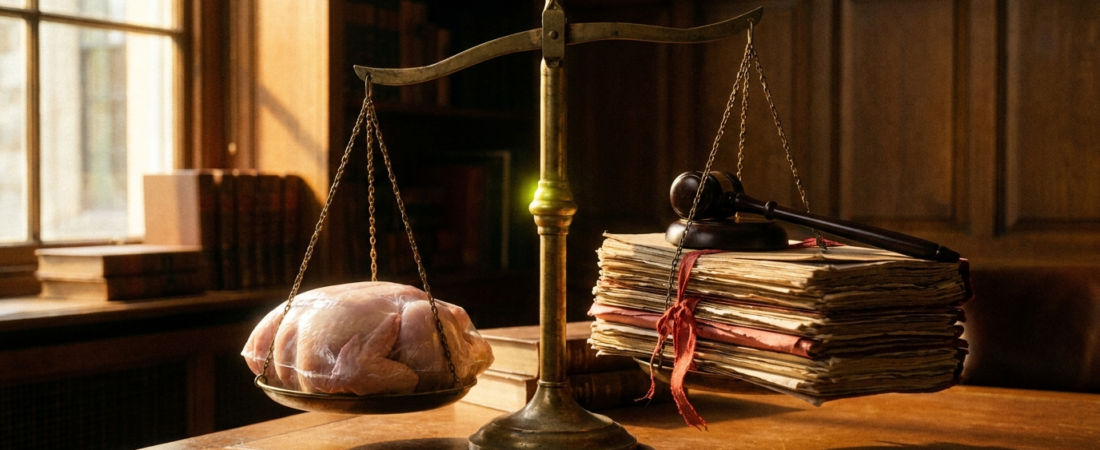

DOSSIER TYSONMEAT UNDER SCRUTINY FORENSIC
The Legal and Health Record of the Largest Meat Processor in the United States (1997–2026)
Tyson Foods, Inc. It is the largest meat processor in the United States and one of the largest protein conglomerates in the world, with revenues exceeding $53.3 billion in the fiscal year 2024. Founded in 1935 Founded in Springdale, Arkansas, as a modest live poultry transport operation, the company defined its trajectory through aggressive vertical integration initiated in 1947 and an era of massive acquisitions—Holly Farms (1989), IBP (2001), Hillshire Brands (2014), and Keystone Foods (2018)—that transformed it into the world's largest processor of chicken, beef, and pork. Today it employs approximately 139,000 people and controls near the 20% of the country's beef, pork and chicken production.
Behind the financial success, a review of judicial, regulatory, and operational records reveals a business model that systematically outsources risks and costs to the public. The record documents stock market fraud, international bribery, price-fixing collusion, deceptive bio-advertising, food security crises, labor exploitation—including child labor—and large-scale environmental damage. The analysis suggests that penalties imposed by regulatory agencies are frequently internalized as mere operating costs within a structure geared toward maximizing volume.
Module 1 — Governance, Corruption and Regulatory Capture

The SEC fraud and embezzlement of Don Tyson (2005)
In 2005, the Securities and Exchange Commission (SEC) The SEC filed charges against Tyson Foods and its former CEO, Donald "Don" Tyson. The SEC determined that, among 1997 and 2003, the company issued representational statements (proxy statements) deceptive that concealed more than 3 million dollars in personal benefits and expenses channeled towards Don Tyson, his family and close friends.
The breakdown illustrates the lack of internal controls: $689,016 in direct personal expenses—oriental rugs for $20,000, antiques for $18,000, a horse for $8,000 and a vacation in London for $15,000—; $464,132 for the personal use of properties in the English countryside and in Cabo San Lucas, including wages of cooks, drivers and yacht crew; $426,086 on corporate jets for family and friends; and $203,675 in cleaning five private residences. The company fraudulently classified more than one million dollars as «"travel and entertainment expenses"» o «"performance bonuses"». To settle the charges without admitting guilt, Tyson paid a civil fine of $1.5 million and Don Tyson a personal sanction of $700,000, in addition to reimbursing more than 1.5 million to the company's coffers.
Bribery in Mexico and the FCPA Act (2011)
In 2011, he Department of Justice (DOJ) and the SEC took action against Tyson for violating the Foreign Corrupt Practices Act (FCPA). The investigation determined that company representatives in Mexico systematically paid bribes to veterinary inspectors employed by the Mexican government to ensure the sanitary certification of their facilities, circumventing inspection protocols. Tyson signed a deferred prosecution agreement and agreed to pay a criminal fine of $4 million to the DOJ, more than an additional one million in civil penalties.
Lobbying and regulatory capture
The ability to mitigate the consequences of their violations relies on a considerable lobbying apparatus: from 2010, Tyson has invested close to $18 million in lobbying through its political action committee (TYPAC), the Arkansas state PAC, and direct corporate contributions. In the 1990s, executives hosted the then-Secretary of Agriculture, Mike Espy, with trips on private planes and sports tickets, in an episode linked to the elimination of chicken import regulations in Puerto Rico. During the COVID-19 crisis, the proximity of the board's chairman, John Tyson, to the White House facilitated a Executive Order designed to shield processing plants from lawsuits for workplace negligence.
Module 2 — The Agri Stats Data Board: Prices and Wages

The data exchange mechanism
For more than a decade, Tyson participated —along with competitors such as JBS, Smithfield, Perdue y Sanderson Farms— in an information exchange scheme facilitated by Agri Stats, Inc., a benchmarking firm (benchmarkingThe processors sent Agri Stats volumes of confidential and granular data—prices, production costs, plant capacity, herd sizes, margins, and wages—at the individual facility level. Although presented as anonymous, the level of detail allowed executives to decode the identity of their rivals and gain near-total visibility into their operations. Knowing how much each producer was making and at what price, the group implicitly reduced production, creating an artificial shortage that drove up consumer prices.
The magnitude of the damage led to DOJ A bipartisan coalition of attorneys general has already filed a lawsuit against Agri Stats. 2023. In May 2026, A consent decree permanently banned non-public sales and price reports, requiring that shared data have at least 45 days average age and prohibited breakdown at the plant level.
Financial consequences
The exposure of the scheme sparked class-action lawsuits under the Sherman Antitrust Act. The plaintiffs included direct buyers such as Walmart y Chick-fil-A even individual consumers. In addition to manipulating prices, corporations used the data to suppress the wages of processing workers in the low-income bracket. $11 to $13 per hour. According to the database Violation Tracker According to Good Jobs First, Tyson's fines for anti-competitive practices exceed $300 million.
| Litigation | Sector and those affected | Conciliation |
|---|---|---|
| Chicken pricing | Supermarkets, distributors and consumers (2008–2019) | 221.5 million USD |
| Suppression of wages (birds) | Low-income workers in poultry plants | 115.5 million USD |
| Pork pricing | Indirect buyers and institutions | $133 million (48 M + 85 M) |
| Elimination of wages (beef and pork) | Red meat processing (2000–2024) | $72.5 million |
| Beef pricing | Beef buyers and consumers | $55 million USD |
| Raw chicken prices | Individual consumers (multi-state fund) | 22.5 million USD |
Although Tyson formally denies guilt in the out-of-court settlements, antitrust lawyers point out that payments of this magnitude reflect the risk of massive punitive damages in jury trials.
Module 3 — Biological Fraud and Food Security Crisis
The farce of meat "Raised Without Antibiotics" (2007–2010)
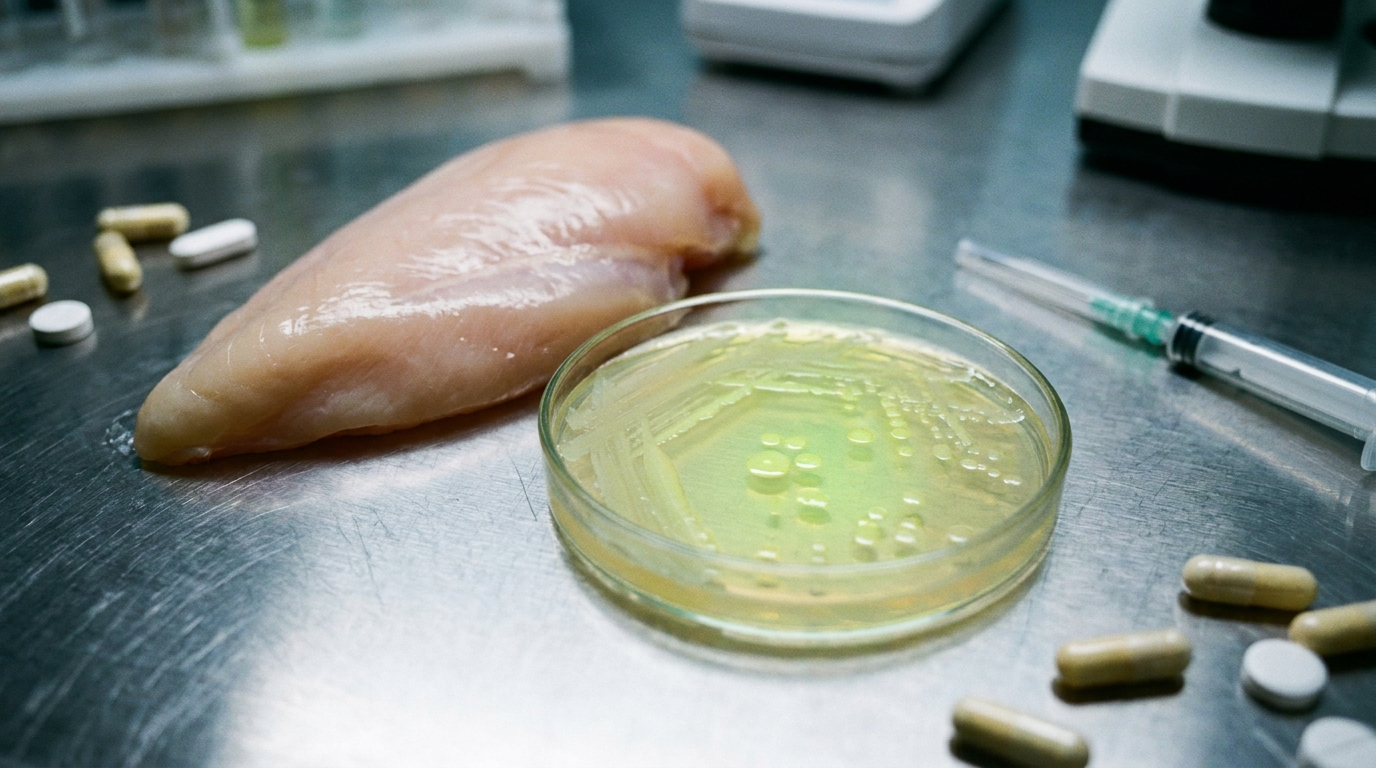
In 2007, Seeking to capitalize on the medical alarm over resistant bacteria, Tyson launched a campaign $70 million claiming that their chickens were «"Raised Without Antibiotics"». The claim was, biologically, a fiction: the company kept adding ionophores —antimicrobial additives that the USDA classifies unequivocally as antibiotics—the birds' feed. During legal scrutiny, its executives also admitted that they routinely injected the eggs, days before hatching, with gentamicin, a commonly used antibiotic in human medicine; Tyson argued that the term «"servant"» It only applied after hatching.
The campaign prompted a lawsuit under the Lanham Law due to false advertising, placed by competitors such as Perdue y Sanderson Farms. A federal court in Baltimore ruled that the initial approval of the labels by the FSIS The USDA ruling did not confer immunity, based on surveys of more than 600 consumers conducted by Professor Michael B. Mazis that demonstrated public confusion. The court ordered the removal of all advertising nationwide, and in 2010 Tyson settled a consumer class-action lawsuit over $5 million. In 2023, During the avian flu outbreak, the company officially dismantled its "No Use of Antibiotics" policy.
«"Greenwashing": "Climate-Smart" meat»
More recently, Tyson announced an engagement «"net zero emissions"» (net-zero) for 2050 and marketed a line, Brazen Beef, under the slogan of meat «"climate-smart"». The problem is that ruminal digestion generates methane, with a global warming potential of approximately [amount missing]. 80 times greater than CO₂ over 20 years; beef production represents the 85% of the corporation's emissions. Despite its revenue, Tyson allocated barely $50 million (less than 0.1%) to gas reduction technologies, and invested three times as much in marketing.
In September 2024, he Environmental Working Group (EWG) and the Animal Legal Defense Fund (ALDF) They sued Tyson under the District of Columbia Consumer Protection Act. The DC Superior Court dismissed Tyson's attempts to halt the case, and in November 2025 The company agreed to permanently cease its "net zero emissions" claims and withdraw the "climate-smart" label from Brazen Beef for a mandatory period of five years.
The deadly outbreak of Listeria (2021) and physical pollution
In July 2021, Tyson ordered the retirement of 8,955,296 pounds (approximately 4,000 tons) of frozen precooked chicken products contaminated with Listeria monocytogenes, a pathogen that multiplies under refrigeration. The chicken was produced at the Dexter, Missouri, plant between December 2020 and April 2021 and distributed to hospitals, nursing homes, the Department of Defense, schools, and supermarkets. The investigation by the CDC and the USDA linked the consumption to a listeriosis outbreak with at least a death documented —an infection that is especially devastating for the elderly, immunocompromised, and pregnant women—.
The wear and tear of high-speed machinery—where even 140 birds per minute— has triggered repeated withdrawals classified as High Risk (Class I) by the USDA:
| Year | Product | Pollution | Volume |
|---|---|---|---|
| 2023 | Tyson «Fun Nuggets» (children) | Metal fragments (oral injuries) | 29.819 lb |
| 2023 | Hillshire Farm Sausages | Bone fragments | 15.876 lb |
| 2022 | Ground beef (Tyson Fresh Meats) | Fragments of mirror (glass type) | 93.697 lb |
| 2019 | Panko Chicken Nuggets | Industrial rubber | 36.420 lb |
| 2019 | Chicken Empanadas (Weaver) | Foreign materials | 39.078 lb |
Module 4 — The Human and Environmental Cost
Child labor in industrial cleaning (2022–2024)
In 2022, he Department of Labor (DOL) investigated Packers Sanitation Services Inc. (PSSI), a cleaning contractor owned by the Blackstone fund. It was confirmed that PSSI routinely employed more than 102 minors (Ages 13 to 17, many recent immigrants) on night shifts, cleaning dangerous machinery with caustic chemicals; several suffered burns. PSSI was fined $1.5 million. Minors were found at at least two Tyson facilities (Green Forest, Arkansas, and Goodlettsville, Tennessee); under the joint employment doctrine, Tyson exercised control over operating conditions. September 2024, The DOL carried out raids with search warrants at plants in Rogers and Green Forest following reports of children aged 11 to 14 working at the «"kill floor"» at night.
COVID-19 in Waterloo: Deadly Negligence (2020)
Tyson's pork plant in Waterloo, Iowa, became an epicenter of contagion in 2020: more than 1,000 out of 2,800 Workers were infected and at least six They died, including Isidro Fernandez. According to the wrongful death lawsuit, managers failed to provide protective equipment, instructed interpreters to lie to workers about the situation, ordered symptomatic employees to remain on the line, and offered $500 bonuses for not missing work. The most grotesque element was a cash bet on what percentage of the staff would contract the virus.
Tyson attempted to dismiss the lawsuits by invoking the Federal Officer Removal Statute, claiming that the Executive Order of the Defense Production Act required it to operate. Eighth Circuit Court of Appeals He unanimously rejected it in Buljic v. Tyson Foods, And the Iowa Supreme Court, while dismissing the claims against the corporate entity based on the workers' compensation law, allowed the claims against the individual managers to proceed under the exception of «"gross negligence"».
Environmental devastation and water pollution
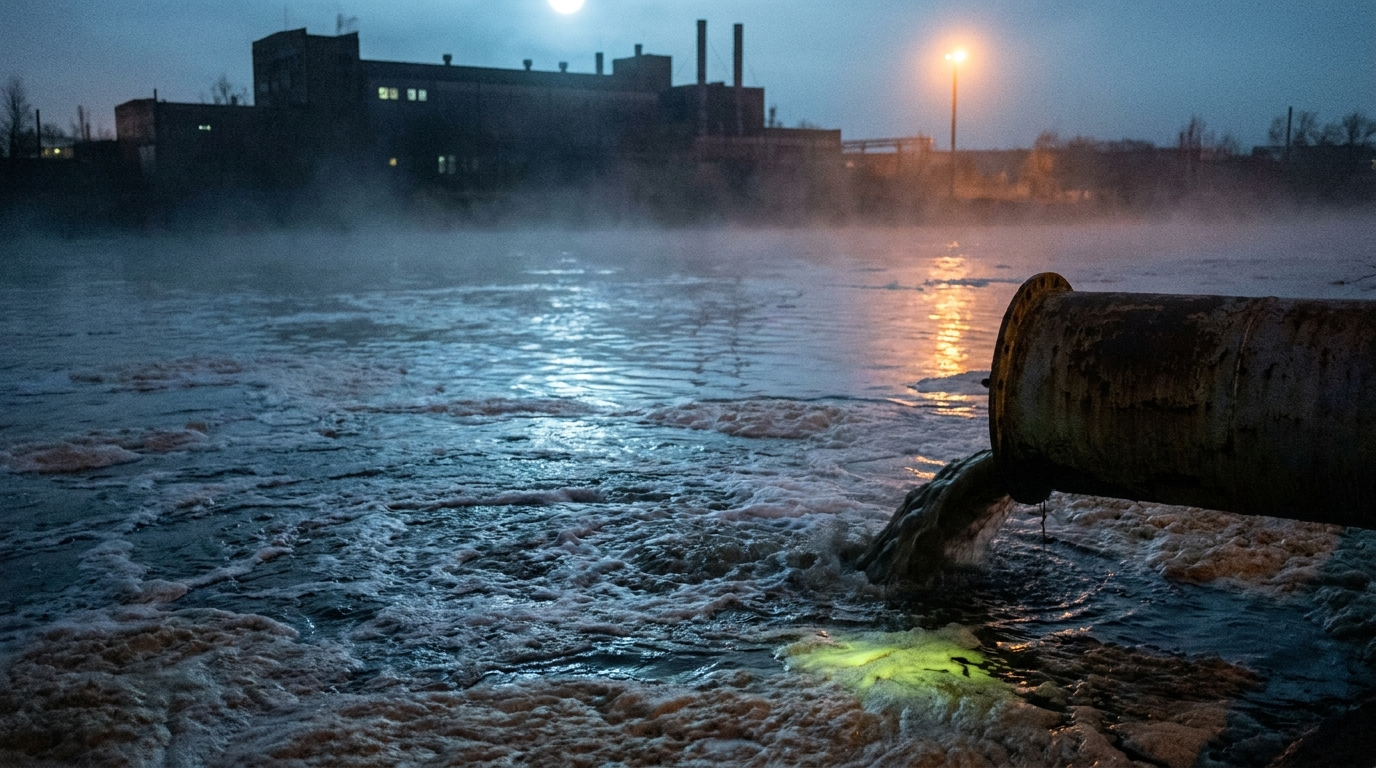
A report from 2024 of the Union of Concerned Scientists (UCS), titled Waste Deep, evaluated 41 of the corporation's largest slaughterhouses and found that, between 2018 and 2022, Tyson dumped more than 371.1 million pounds of pollutants in US water bodies, in a flow exceeding 18.5 billion gallons of wastewater. The load includes cyanide, blood, pathogens such as E. coli and large amounts of nutrients (34.25 million pounds of nitrogen and 5.06 million of phosphorus) that catalyze harmful algal blooms and feed the hypoxic "dead zone" of the Gulf of Mexico. The report emphasized that much of this spill occurred inside of the permissive limits approved by the EPA.
The emblematic case is the lawsuit filed by the state of Oklahoma due to chronic pollution of the Illinois River Basin, which began in 2005. 2023, Federal Judge Gregory Frizzell found the poultry companies headed by Tyson responsible, and in February 2026 Attorney General Gentner Drummond announced that Tyson agreed to pay $19 million for the remediation of the basin and to assume the cost of a court-appointed administrator, while Cargill agreed to pay 6.5 million.
Animal welfare and epidemiological risk
Covert investigations of Mercy for Animals They documented systematic abuses on Tyson supplier farms. Slaughter rates—up to 140 chickens per minute—result in a large number of birds not being stunned and being submerged alive in scalding tanks. These confinement densities act as biological factories for the mutation of epizootics such as Highly Pathogenic Avian Influenza (HPAI): In 2017, a direct supplier's farm in Tennessee was the commercial "patient zero" of a lethal variant, requiring the extermination of more than 73,000 birds. Biosecurity stress and losses due to avian flu finally forced Tyson to abandon its "No Antibiotics" promise to safeguard its remaining biological assets.
Forensic Balance
First, The dossier suggests that the negligence is not sporadic, but inherent to the business model: the outsourcing of risks to consumers, workers and ecosystems is a constant that spans five decades and every link in the chain.
Second, the exchange of data of Agri Stats It allowed for the imposition of artificial oligopolistic prices and the compression of the basic labor market. The correction came through litigation and DOJ action—not corporate self-regulation—and only after years of judicial stalemate.
Third, The "Antibiotic-Free Raised" and "Climate-Smart" meat campaigns show a mechanism for co-opting green market trends through scientifically unsustainable claims wrapped in a veneer of legality, until the courts dismantled them.
Room, The accumulated fines—the $19 million for the Illinois River, the hundreds of millions for price fixing, the compensation for deaths during COVID-19, or the embezzlements sanctioned by the SEC—barely scratch the surface of the profitability of a giant that earns more than $53 billion annually. This monetary disproportion is, perhaps, the central finding: it ensures that risk persists not as a misguided transgression, but as an economically calculated pillar.
Selected references
- US Securities and Exchange Commission (2005). Litigation Release LR-19208: SEC v. Tyson Foods, Inc. and Donald Tyson.
- US Department of Justice, Antitrust Division (2026). US and Plaintiff States v. Agri Stats, Inc. — Competitive Impact Statement and consent decree.
- Hagens Berman (2024). Poultry Processing Wage-Fixing Antitrust Settlements ($398 M).
- Associated Press (2021). Tyson Foods to pay $221.5M to settle price-fixing claims.
- Good Jobs First. Violation Tracker: Tyson Foods (accumulated penalties).
- Arnold & Porter (2008). Chicken «Raised Without Antibiotics»: The Latest Lanham Act Litigation.
- Animal Legal Defense Fund and Environmental Working Group (2024). Environmental Working Group v. Tyson Foods, Inc. (DC Superior Court).
- The New Lede (2025, November). Tyson agrees to settlement over climate-smart beef claims.
- USDA Food Safety and Inspection Service (2021). Recall: Tyson Foods Recalls Ready-To-Eat Chicken Products Due to Possible Listeria Contamination.
- Marler Clark (2021). Tyson Chicken Listeria Outbreak.
- US Department of Labor (2023–2024). Investigations into child labor at Packers Sanitation Services / Tyson facilities.
- US Court of Appeals, 8th Circuit. Buljic v. Tyson Foods, Inc.; Iowa Supreme Court (2025). Mehmedovic v. Tyson Foods, Inc.
- Union of Concerned Scientists (2024). Waste Deep.
- Oklahoma Office of the Attorney General (2026, February). Drummond secures settlements with Tyson and Cargill in landmark poultry pollution case.
- Mercy for Animals. Undercover investigations: Tyson Foods and suppliers.