
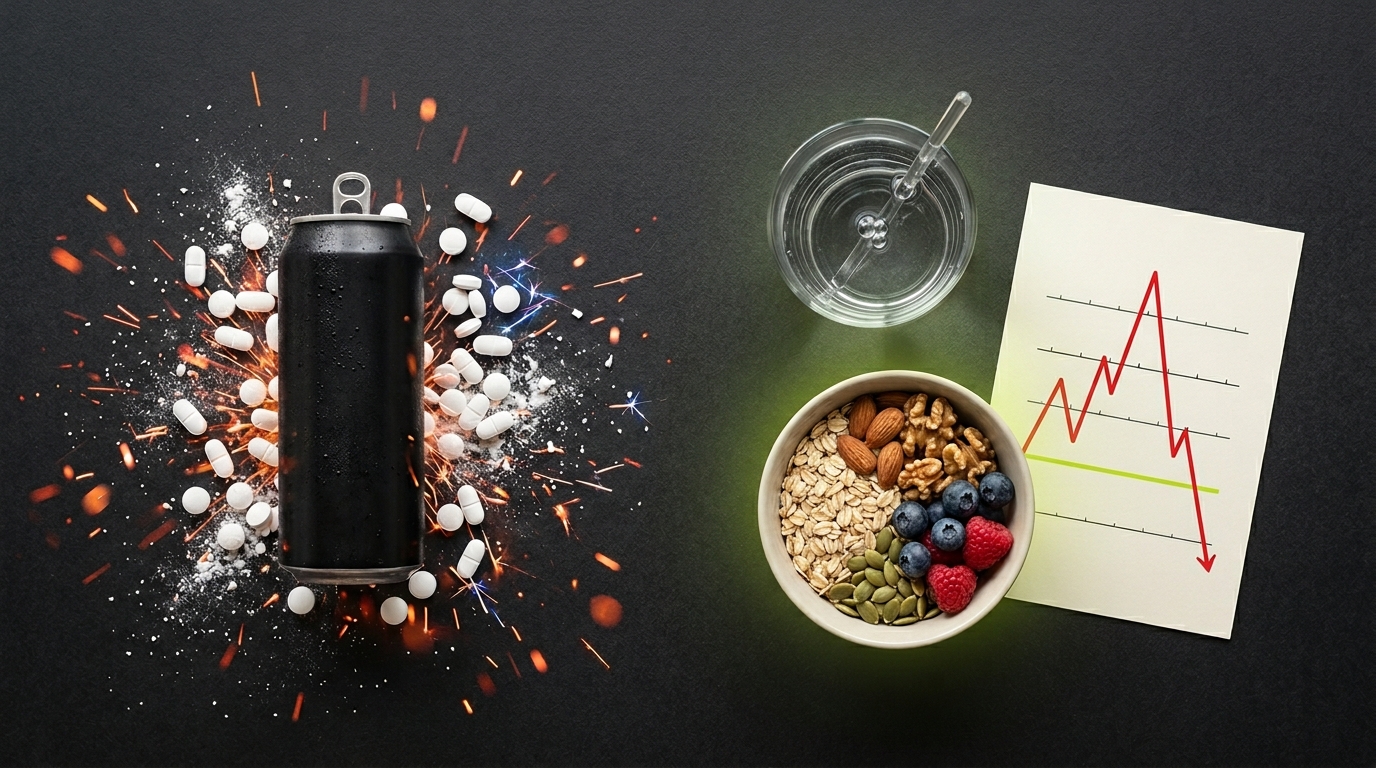
 DECISION · BEFORE THE “ENERGY DRINK”
Why “energy” is the best-selling promise and the worst-measured
“More energy” is what everyone wants, but no one defines. That's why it's the perfect label for selling snake oil. This guide gives you the filter to distinguish real—sustained—energy from a guaranteed crash.
The trick of the word “energy”
Almost anything that gets your pulse racing feels like energy for 40 minutes. That's why "energy" is marketing's favorite claim: it's subjective, immediate, and almost impossible to refute in the moment. You feel something, then you feel the crash, and by then you've already paid.
The problem isn't that it doesn't work. The problem is that you're measuring the wrong sensation.
Real energy vs. borrowed high
The borrowed high
It gives you a rapid peak followed by an equally rapid crash. It usually relies on stimulants and providing energy upfront that you'll pay for later. It feels powerful because it's abrupt, not because it's good. The telltale sign: you need another dose to get back to where you started.
Real energy
It doesn't feel like a blow; it feels like the fog has lifted. It's sustained, without a dramatic drop, and it usually comes from fixing the boring things: sleep, stable blood sugar, hydration, exercise. It doesn't sell in bottles because it can't be easily bottled.
Simple rule: If a product gives you a noticeable energy boost within a minute, be wary. The energy that matters is what you feel at the end of the day, not at the beginning.
3 questions to ask before paying for “energy”
1. Does this provide energy or just accelerate it?
A stimulant moves energy through time; it doesn't create it. Useful for a specific moment, dangerous as a daily habit to mask a sleep deficit.
2. How will I know if it worked in a month?
If your only metric is "I felt energized," you're measuring the placebo effect plus the stimulant effect. Define something observable: mid-afternoon performance, number of crashes, sustained focus.
3. What am I covering up?
Chronic fatigue almost always points to an underlying cause: lack of sleep, meals that cause blood sugar to spike and then crash, dehydration, or a sedentary lifestyle. Masking that with a stimulant is just paying the price.
Checklist of the honest “energizer”
- Indicate the mechanism by which it acts (not just “energy formula”)
- It does not promise immediate peaks as its main argument
- It lets you measure a sustained effect, not a feeling.
- It doesn't ask you to increase the dose to feel the same.
- He admits that sleep and food weigh more than he does.
The next step
If you've already covered the basics and want to move on to tools with real support, the Arsenal separates what sustains power from what merely lends it. This guide teaches you how to Don't buy into the hype.; The protocol shows you what is worthwhile.
View the power protocol →Note: Educational content. This is not a substitute for medical advice. Persistent fatigue may have underlying causes that require professional evaluation.