


VITAMIN D: ANATOMY OF A LACK
Metabolism, the silent deficiency in Mexico and evidence-based supplementation
Vitamin D is often misnamed. Strictly speaking, it's not a vitamin: it's a prohormone which the body itself produces when the skin is exposed to sunlight, and whose receptors appear in almost all tissues. Therefore, its role goes far beyond the old headline of "fixing calcium in bones": it participates in the immune response, muscle function, the regulation of inflammation, and cardiovascular and metabolic risk.
The paradox explored in these pages is, above all, geographical. Mexico receives sunshine almost year-round; one might expect vitamin D deficiency to be a clinical rarity. Data from national surveys tell the exact opposite: the deficiency behaves like a silent pandemic, hitting hardest precisely where it's least expected. The intuition—"if there's sun, there's vitamin D"—turns out to be a poor representation of reality.
This document reconstructs, with the available evidence, five questions: what is vitamin D and how is it activated, why its correct measurement matters so much, how widespread is the deficiency in the country, why modern supplementation no longer uses D3 alone, and where is the boundary between safely correcting and doing harm.
Module 1 — What vitamin D really is (and why it is measured in the blood)
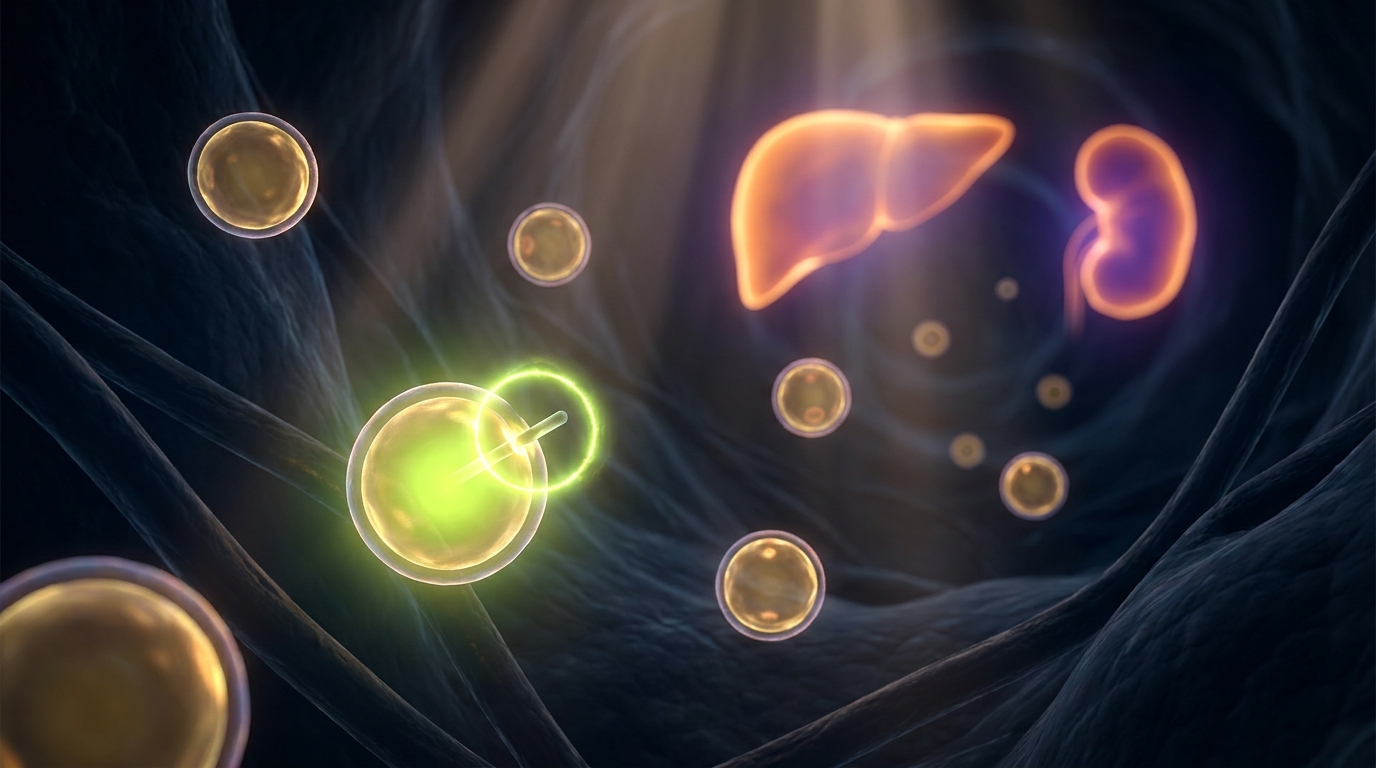
From the sun to the active hormone: a two-step chain
It all starts in the skin. Ultraviolet B (UVB) radiation transforms a cholesterol precursor into vitamin D3 (cholecalciferol). Herein lies the first uncomfortable nuance: melanin acts as a natural sunscreen. According to the Fitzpatrick skin type scale, darker skin tones need more sun protection. much longer periods of sunshine to produce the same amount as fair skin. It's not an aesthetic detail, but a biological determinant of who falls short.
But that D3 is still useless: it's inactive. It goes through two transformations. First the liver converts it into 25-hydroxyvitamin D, called calcifediol. Then the kidney, governed by parathyroid hormone (PTH), converts it into calcitriol, the truly active form. It's worth remembering this chain—skin, liver, kidney—because it explains almost everything that follows.
D2 versus D3: they are not interchangeable
Two forms coexist on the counter. Ergocalciferol (vitamin D2, (of plant or fungal origin) and cholecalciferol (vitamin D3, (of animal origin or, in vegan formulas, from lichens and microalgae). The evidence is compelling: the D3 lifts and supports better Blood levels are higher because it binds more strongly to its transport protein and remains in circulation longer. It is currently the standard for replenishing reserves.
Why is 25(OH)D measured and not the active hormone?
It would seem logical to directly measure the active hormone, calcitriol. In practice, this is misleading. When reserves begin to decline, the body increases PTH, which accelerates the production of calcitriol from the few remaining reserves. The result is a laboratory trap: calcitriol can be released. normal or even high while the reservoirs are emptying. It's called secondary hyperparathyroidism. That is why the international consensus uses the 25-hydroxyvitamin D (25(OH)D), with a half-life of 15 to 30 days, as the only reliable biomarker of royal status.
Clinical thresholds that guide the diagnosis are built upon this marker:
| Classification | 25(OH)D (ng/mL) | Equivalent (nmol/L) | What does it mean |
|---|---|---|---|
| Deficiency / lack | Less than 20 | Less than 50 | Severely impaired calcium absorption. Risk of rickets, osteomalacia, secondary hyperparathyroidism, and myopathy. |
| Insufficiency | 20 to 30 | 51 to 75 | Sustained suboptimal state. Slow loss of bone density and increased susceptibility to infections. |
| Sufficiency / optimal | More than 30 | More than 75 | Therapeutic objective. Calcium absorption of 30 to 40% and improved muscle and bone health. |
| Potential toxicity | More than 100 | More than 250 | Increased risk of hypercalcemia, kidney stones, and vascular damage. |
Module 2 — The Mexican Paradox

A sunny country, yet still running a deficit
The National Health and Nutrition Survey (ENSANUT) 2018-2019 analyzed 1,262 women From 20 to 49 years old, a sample representing more than 25 million people. The result shattered any optimism: 46.1% with insufficiency y 31.6% with frank deficiency. Added together, close to 77.7% It did not reach the sufficiency threshold. Compared to the combined 86.6% of the 2012 ENSANUT survey, the improvement is barely marginal: the problem remains endemic.
The social paradoxes of the deficit
Breaking down the data reveals something counterintuitive. The deficiency is higher in the city than in the countrysideVertical architecture, indoor workdays, and pollution that scatters UVB radiation reduce skin synthesis. And there's an income paradox: the highest economic stratum exhibits the elderly The deficiency rate is higher among the poorest segments of the population, while the lowest-income group registers the lowest. The explanation is not mysterious: closed offices, commutes by car, and rigorous use of sunscreen keep those who can afford it out of the sun.
| Stratum | Insufficiency | Deficiency | Reading |
|---|---|---|---|
| Urban | 47.2% | 34.4% | Indoor life and smog that filters UVB. |
| Rural | 42.2% | 21.2% | Working outdoors and enjoying clearer skies. |
| Low income | 46.0% | 18.9% | Outdoor manual labor, public transport. |
| High income | 43.7% | 41.3% | Office, closed car and strict photoprotection. |
| Northern Region | 50.2% | 29.3% | Extreme weather that pushes people to use air-conditioned indoors. |
| Central Region | 44.4% | 37.7% | The biggest obvious deficiency, associated with smog. |
| Southern Region | 46.3% | 22.9% | Better relative status, less industrialized life. |
Body weight and sedentary lifestyle
Biological factors are also present in addition to environmental factors. obesity —present in 39.71% of the sample— acts as an undesirable reservoir: because it is fat-soluble, vitamin D is sequestered in fatty tissue and is not released effectively into the bloodstream, perpetuating the deficiency. Meanwhile, moderate physical activity is protective, largely because it is usually performed outdoors.
Why the diet isn't enough
The intuitive answer would be “eat better.” The problem is that vitamin D is extremely rare in the food chain. The average intake of Mexican women is barely 2.56 µg/day (about 102 IU), far from the recommended 400 to 600 IU. And meeting that quota with food alone is unfeasible: you would need approximately [number missing] every day. 26 sardines, more than 13 eggs, nearly 1.3 kg of liver or almost 3 liters of milk without fortification. The nutritional conclusion is clear: diet alone does not correct a clinical deficiency.
Module 3 — The metabolic trinity: D3, K2 and magnesium

The D3 no longer travels alone
One of the most significant developments of the last decade is the refutation of vitamin D3 as a standalone therapy. Administering high doses of cholecalciferol as monotherapy for extended periods can not only be ineffective in some individuals but can also contribute to cardiovascular problems. Mechanistic evidence suggests that D3 should be viewed as part of a three-part network: it needs... magnesium y vitamin K2 (in its menaquinone-7 or MK-7 form) to do its job well.
Magnesium: the switch that almost no one checks
The enzymes that "switch on" vitamin D in the liver and kidneys depend on magnesium as a cofactor. When this mineral is scarce—a common occurrence due to depleted soils and ultra-processed diets—supplementation may not work: the prohormone becomes stuck in its inactive forms, leading to a range of symptoms. “"endurance"” to vitamin D. Magnesium also stabilizes cellular ATP, improves insulin sensitivity, and moderates neuronal excitability.
Vitamin K2 (MK-7): the calcium transit director
Active D3 does one thing with enormous efficiency: it increases calcium absorption. What No What it knows how to do is decide where that calcium goes. Vitamin K2 fills that gap. MK-7 activates two key proteins: the osteocalcin, which anchors calcium in bone, and the matrix Gla protein (MGP), which prevents calcium from depositing in the arteries. Without enough K2, high doses of D3 can accelerate the arterial calcificationCalcium enters, but precipitates in the wrong place. The D3 + K2 synergy protects both the skeleton and the endothelium.
Cofactors and timing of intake
The picture is completed with two adjuvants: the zinc (immune defense, wound healing, and testosterone maintenance) and the naringin, A grapefruit flavonoid with effects on bone formation and vascular protection. And there's a simple chronobiological rule: since D3 and K2 are fat-soluble, they should be taken with a meal that has at least 10g of fat; Magnesium, due to its relaxing effect, is usually better tolerated at night.
Module 4 — Dosage, rescue and dangers

Maintenance and rescue therapy
For a healthy person, the reference intake is around 600 IU/day, with a tolerable limit of 4,000 IU. But that quota, intended for prevention, is ineffective for correct an existing deficiency. High-risk groups—older people, those with very dark skin, obesity, bariatric surgery, or intestinal malabsorption—often require maintenance doses of 3,000 to 6,000 IU/day. In cases of severe deficiency (below 20 ng/mL), the standardized rescue protocol is a macrodose of 50,000 IU weekly for 6 to 8 weeks, This is followed by maintenance and monitoring of 25(OH)D levels each trimester. In pregnancies with documented deficiency, daily or bi-weekly regimens are used, always under close supervision.
Calcifediol: the powerful shortcut
There is an advanced alternative. calcifediol It already comes "half activated" (it skipped the hepatic step), so it is 3 to 6 times more powerful and it acts faster than cholecalciferol. Precisely because of this potency, it is not for over-the-counter use: it can precipitate fulminant hypercalcemia. Its use is reserved for specialists and patients with severe renal or hepatic insufficiency, where the body's endogenous mechanisms no longer metabolize vitamin D3 effectively.
When correction causes harm
Hypervitaminosis D is real and iatrogenic: it appears after months of uncontrolled, disproportionate doses. Its mechanism is... hypercalcemia, with symptoms ranging from nausea, metallic taste, and fatigue to kidney stones, arrhythmias, and renal failure. It is contraindicated in primary hyperparathyroidism, hypercalcemia, severe renal insufficiency, and a history of kidney stones. The most treacherous scenario is the sarcoidosis and other granulomatous diseases: granulomas activate vitamin D without restraint, so that between the 47% and 64% of these patients show a 25(OH)D low and misleading while calcitriol levels are toxically high. Blind supplementation in these cases can trigger severe hypercalcemia and kidney failure.
The Mexican market and the COFEPRIS framework
The COFEPRIS separates two worlds: the medications with health registration and the dietary supplements, These medications are prohibited from being claimed to have curative properties. In the prescription market, both finely titrated and megadosed products are available; in the over-the-counter market, there are easily accessible, high-volume formulations and the new generation of synergistic formulas.
| Product / Category | Presentation | Typical use |
|---|---|---|
| Valmetrol-3 (medicine) | 200, 400, 800 and 1,600 IU | Fine titration; supervised pediatrics and geriatrics. |
| Histofil / D-Substitute (medicine) | 4,000 IU dispersible | Rescue from chronic deficit and support in osteoporosis. |
| Hydroferol (medicine) | Calcifediol 0.266 mg | Specialist only (kidney or liver failure). |
| OTC shock (Simi D3, Pharmalife) | 5,000 UI | Restocking over-the-counter products; without control, it increases the risk. |
| Premium formulas D3 + K2 + Mg | Capsules or gummies | Synergistic approach; it is advisable to verify the manufacturing quality. |
The regulatory warning is significant: Mexican legislation on supplements allows for a flexibility that occasionally leads to harmful practices. COFEPRIS itself has issued alerts against products of unproven efficacy sold with miraculous promises, as in the case of the multi-level marketing company. bHIP Global. The biosafety rule is simple: no over-the-counter supplement should be used to consistently exceed the labeled dosage without medical supervision.
Balance / Conclusions
First, Vitamin D is no longer just a matter of bone health. It is a prohormone with systemic effects—immune, muscular, metabolic—and ensuring sufficient intake is a public health objective, not a whim of well-being.
Second, In Mexico, the deficiency is massive and paradoxical: it affects urban areas and high-income earners more than rural areas, diet alone is insufficient to correct it, and only the measurement of 25(OH)D reveals the true extent of the problem. Abundant sunshine guarantees nothing when life is spent indoors.
Third, Rational supplementation is individualized and, increasingly, triadic: quality vitamin D3, magnesium that activates it and vitamin K2 that directs calcium to the bone and away from the artery, taken with fat to be absorbed.
Room, The ethical limit is prudence. Hypercalcemia, nephropathies, and especially sarcoidosis necessitate avoiding blind supplementation: correcting without measuring, in the wrong patient, can transform a cheap remedy into preventable harm.
Selected references
- Public Health of Mexico / INSP. Vitamin D status in Mexican women at reproductive age, ENSANUT 2018-2019. SciELO.
- Medical Research Unit in Nutrition (IMSS). Vitamin D deficiency in Mexico: positioning. IMSS Medical Journal.
- National Institute of Public Health. Micronutrient status in Mexican children and women: ENSANUT Continua 2022.
- National Institutes of Health, Office of Dietary Supplements. Facts about vitamin D. NIH.
- World Medical Association (WMA). Statement on Vitamin D Deficiency.
- Mexican Social Security Institute. Clinical Practice Guideline (CPG) on vitamin D. IMSS.
- General and Family Medicine. Update on the treatment with cholecalciferol in hypovitaminosis D from primary care.
- MSD Manual, Consumer Version. Excess vitamin D.
- MedlinePlus. Hypervitaminosis D. U.S. National Library of Medicine.
- PMC / NCBI. Vitamin D status in sarcoidosis: a cross-sectional study.
- PMC / NCBI. The role of vitamin D in sarcoidosis.
- AEMPS, CIMA. Cholecalciferol 50,000 IU technical sheet.
- Murciasalud, Preevid. Daily or bi-weekly doses for pregnant women with vitamin D deficiency.
- COFEPRIS. Health alert regarding products from the company bHIP Global.