
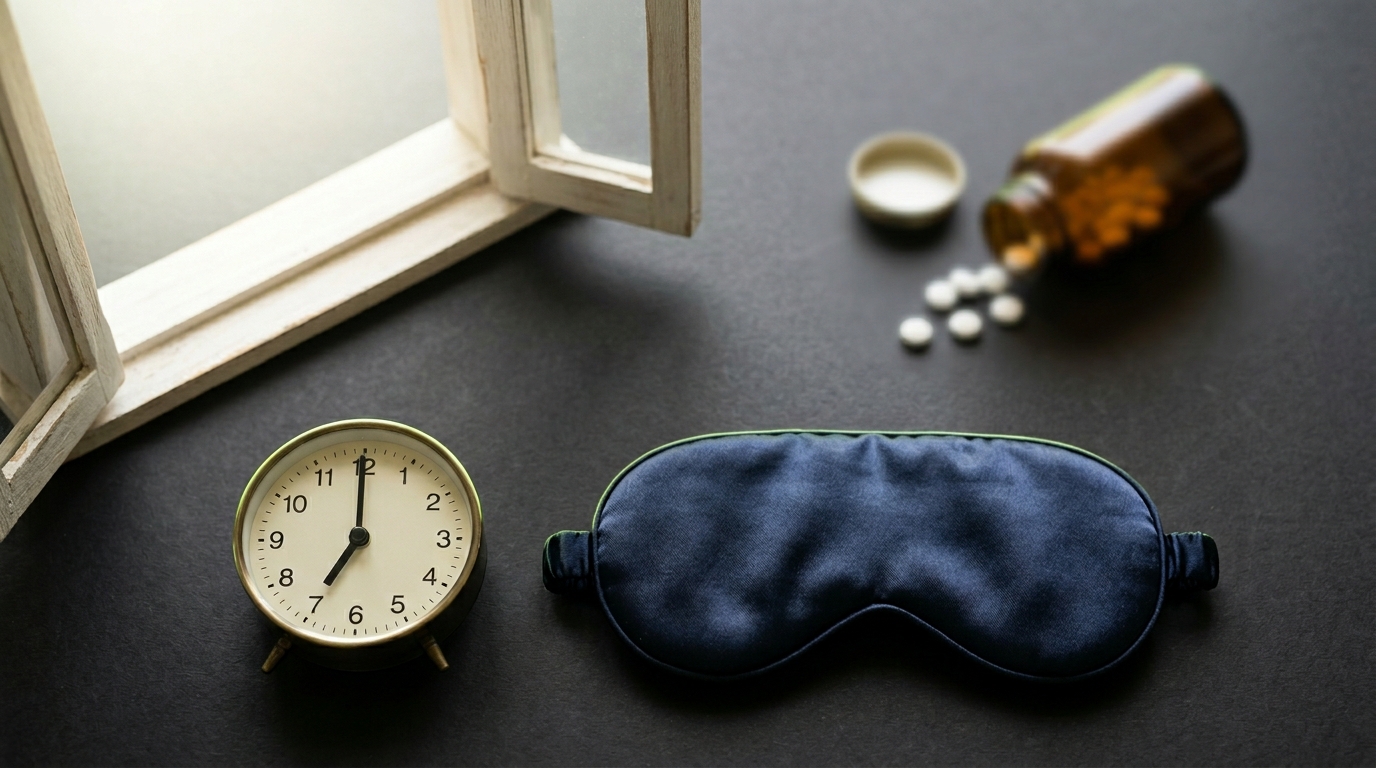
 DECISION · BEFORE MELATONIN
How to know if you really need a sleep supplement
Before you buy melatonin, magnesium, or whatever the latest formula is, there are three free tips that almost no one uses up. This guide isn't trying to sell you anything; it's helping you decide if your problem is related to your body's chemistry or your habits.
The mistake we all repeat
When we don't sleep well, our reflex is to reach for something to eat. But most bad nights don't stem from a deficiency; they stem from an environment and routine that send the brain the wrong signal. Buying a supplement without checking for that is like turning up the volume to drown out an alarm.
The good news: three free tests will tell you, in one week, whether your problem is chemistry or habit. And it's almost always habit.
The 3 free signals (use them all first)
1. Light: Does your morning signal the clock?
The most powerful signal to help you sleep at night comes during the day. Ten minutes of natural light upon waking anchors your internal clock better than any pill. If you spend the morning in dim light and the night in front of a bright screen, your body won't know what time it is. Fix this before spending a penny.
2. Darkness: Is your room really dark?
Your body produces melatonin for free, but only in true darkness. A room with dimmed lights, thin curtains, or a phone on the nightstand sabotages its production. Before buying bottled melatonin, try a week of total darkness. Many people discover they already had it; they were just suppressing it.
3. Regularity: Do you go to bed at times that change every night?
The body rewards predictability. Going to sleep and waking up at the same time—even on weekends—is worth more than any formula. If your schedule fluctuates by two or three hours depending on the day, no supplement is going to sort out that chaos for you.
Simple rule: If you haven't exhausted your light, dark, and regular routines for two weeks, you still don't know if you need a supplement. You just know you don't want to change your habits.
So, when does it make sense?
A supplement can help in specific cases: a schedule change due to travel, a period of acute stress, or when you've already organized the basics and still need a boost. At that point, it stops being a temporary fix and becomes a tool. The difference lies in the order: first the environment, then the molecule.
Checklist before buying
- I receive natural light in the first 30 minutes of the day
- My room is completely dark at night.
- I go to bed and wake up at the same time (±30 min)
- I cut out caffeine after mid-afternoon
- I did this for 2 weeks and I'm still sleeping badly
If you checked all five, then yes: it's worth evaluating a supplement with discernment.
The next step
If you want to move from "deciding" to "optimizing," Arsenal's rest strategy focuses on the how: which compounds have real backing, at what doses, and for which profile. This guide tells you. Yeah You must enter; the protocol tells you so. as.
See the rest protocol →Note: Educational content. This is not a substitute for professional medical advice. Persistent insomnia warrants medical evaluation.