


RECORD C8FORENSIC ANATOMY OF A POISON ETERNAL
From the miracle of Teflon to the eternal chemical that already dwells in the blood of humanity's 99%
More than 99% Of the humans analyzed in biomonitoring studies, at least one perfluoroalkyl compound that did not exist before World War II is found to be present in their blood today. An analysis of more than 10.000 serum samples found that 98,8% It contained at least one of these substances, often in mixtures of dozens of different variants. The original vector of that infiltration has a technical name: perfluorooctanoic acid, industrially classified as PFOA o C8.
PFOA did not enter the human bloodstream through an accident of nature, but as an input in a specific industrial process: the manufacture of Teflon. Polytetrafluoroethylene (PTFE) was discovered on April 6, 1938 by the chemist Roy J. Plunkett in the laboratories of DuPont in New Jersey, and marketed as a household coating starting in 1945. To manufacture it on a large scale, a powerful surfactant was required to disperse the polymer: that reagent was C8, synthesized by 3M by electrochemical fluorination in 1947 and acquired by DuPont since 1951 for its Washington Works plant in West Virginia.
What advertising presented as a triumph of modern life concealed an uncomfortable fact: the molecule that made domestic comfort possible was, at the same time, virtually impossible to eliminate from the body and the environment. This case reconstructs, step by step, the chain that runs from the laboratory to the bloodstream, from the bloodstream to the courtroom, and from the courtroom to a substitute who repeats the pattern.
Module 1 — The Impossible Molecule: Autopsy of an Eternal Chemist
The bond that biology cannot break
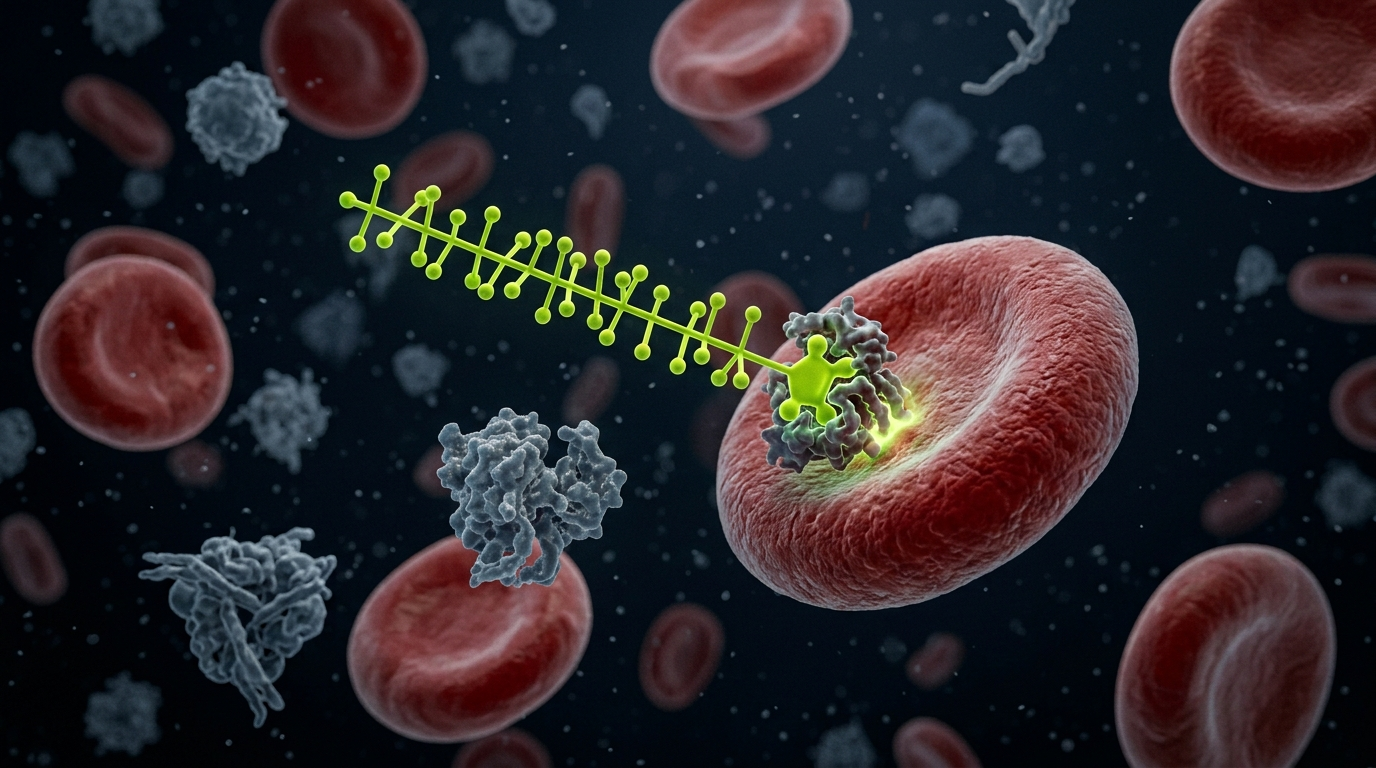
PFOA owes its nickname —C8— to its structure: a chain of eight carbon atoms saturated with fluorine and topped by a carboxylic acid group. Its persistence is explained almost entirely by a single chemical feature: the carbon-fluorine (CF) bond, one of the strongest covalent bonds in organic chemistry. Breaking it requires about 485 kJ/mol, compared to the 327 kJ/mol of the carbon-chlorine bond present in contaminants that nature does manage to degrade. This thermodynamic gap is the reason why PFOA and its analogues were called eternal chemicals (Forever Chemicals): neither solar radiation nor microbial digestion breaks them down, and the human body lacks the enzymes necessary to metabolize them.
Unlike classic lipophilic contaminants such as PCB Unlike dioxins, which remain inertly sequestered in fatty tissue, PFOA is amphipathic: it repels water and oil due to its fluorinated tail, but its ionic head makes it water-soluble. Instead of hiding in fat, it circulates in the blood bound to serum proteins, especially albumin, with an estimated half-life in human serum of around 3.8 years. When it circulates, its linear architecture mimics long-chain fatty acids and aberrantly activates the nuclear receptor. PPARα, a central regulator of lipid metabolism in the liver, kidney, and heart. In animal models, this sustained activation is associated with hepatic hypertrophy, cell proliferation, and inhibition of apoptosis, along with interference with thyroid hormones and reproductive development.
The six pathologies of the probable bond
After years of litigation and scrutiny by an independent scientific panel on exposed populations, an association between the presence of PFOA in serum and a defined group of diseases was documented. The table summarizes the mechanism described for each disease.
| Pathology | Documented mechanism |
|---|---|
| Kidney cancer (renal cell carcinoma) | Continuous filtration through the renal tubules, chronic oxidative stress, and aberrant proliferation associated with persistent activation of the PPAR pathways. |
| Testicular cancer (Leydig cells) | Interference with the gonadal endocrine axis and cell dynamics during spermatogenesis, with disruption of hormone synthesis. |
| Thyroid disease | Competitive displacement of thyroid hormones (T4 and T3) from their transport proteins, altering neuroendocrine feedback. |
| Ulcerative colitis | Dysfunction of anti-inflammatory pathways in the intestinal mucosa, with chronic autoimmune response on the colonic epithelium. |
| Gestational hypertension / preeclampsia | The compound crosses the placental barrier and alters fetal angiogenesis and maternal vascular perfusion. |
| Hypercholesterolemia | Alteration of hepatic lipoprotein metabolism, with elevation of triglycerides and cholesterol in plasma. |
Module 2 — Washington Works: The Chronology of a Cover-Up

The Washington Works plant, operated by DuPont Located outside Parkersburg, West Virginia, on the banks of the Ohio River, it was the source of C8 emissions for almost five decades. Documentation recovered later through court discovery warrants reveals that internal knowledge of the toxicity preceded its public disclosure by years or decades.
The undisclosed internal chronology
| Year | Internal industry finding |
|---|---|
| 1950 | Essays on 3M Studies in mice confirm that fluorinated compounds accumulate in the blood instead of being excreted. |
| 1961 | A toxicologist from DuPont It documents liver enlargement in rats and rabbits and warns in writing that C8 should be handled with extreme care. |
| 1966 | The FDA It rejects a request to use PFAS compounds as food additives, citing observed liver damage. |
| 1970 | Internal reports classify C8 as highly toxic by inhalation and moderately toxic by injection. |
| 1979 | Internal clinical surveys among Teflon line workers detect enzymatic alterations consistent with liver damage. |
| 1981 | 3M DuPont reports studies in which pregnant rats exposed to the virus give birth to offspring with eye malformations. |
The Bailey case and the return to toxic areas
In May 1981, After receiving a study from 3M describing eye malformations in rat pups, DuPont removed women of childbearing age from the highest-exposure areas at the Washington Works and monitored a group of pregnant workers. According to internal records, of the seven documented cases, two gave birth to babies with malformations. One of those cases was that of Bucky Bailey, son of the factory worker Sue Bailey, born with facial and ocular malformations. A subsequent internal memo documented the follow-up of a four-month-old child with a single nostril and an eye defect. The chief toxicologist Bruce Karrh concluded that there was no conclusive evidence to halt operations and, in 1982, The company readmitted women to those areas.
1.7 million pounds to the environment
Between 1951 and 2003, Various risk assessments estimate that more than 1.7 million pounds PFOA released into the environment: spills into the Ohio River, waste buried without an impermeable lining at the Dry Run Creek landfill—more than 14.2 million pounds of saturated sludge—and atmospheric emissions. In 1984, Sampling by the company itself detected C8 in the drinking water of more than 100.000 people in Ohio and West Virginia, in concentrations that exceeded even their own internal tolerance threshold of 1,000 ppt. The notification of substantial risk required by Section 8(e) of the Toxic Substances Control Act (TSCA) did not occur. During that period, fluorocarbon polymers contributed over [amount missing] to the company's annual revenue. 1 billion of dollars.
Module 3 — From Farmer to Scientific Panel: The Judicial Collapse

The case reached the courts through a side route. In the late 1990s, the cattle rancher Wilbur Tennant He lost more than a hundred head of cattle that drank downstream from the landfill. He hired Robert Bilott, A Cincinnati lawyer who had previously represented chemical companies. In the process Tennant v. DuPont (1999), Bilott obtained through the discovery procedure more than 110.000 pages of internal documents that connected the C8 of the toxicology reports with the substance present in the stream.
In March 2001, Bilott transferred the file to the EPA The Attorney General's Office has already filed the class-action lawsuit. Leach v. DuPont represented some 80.000 residents. The agreement of 2004 surpassed the 405 million in dollars and included a decisive clause: the financing of a C8 Scientific Panel, comprised of three independent epidemiologists who evaluated data from 69.030 people, in one of the largest studies ever conducted on a single non-pharmaceutical molecule. 2012, After seven years of analysis, the panel concluded a probable link between PFOA and the six diseases described. Under the terms of the agreement, the company could no longer litigate this general causality in subsequent lawsuits.
The witness trials
Based on the epidemiological report, more than 3.500 Individual claims were consolidated into a multidistrict litigation (MDL 2433). The test trials (Bellwether Trials) set the scale of damages.
| Trial (year) | Diagnosis | Verdict |
|---|---|---|
| Bartlett (2015) | Kidney cancer | $1.6 million compensatory; negligence. |
| Freeman (2016) | Testicular cancer | $5.1 million + $500,000 punitive; the jury found malice. |
| Vigneron (2016-2017) | Testicular cancer | 2 million USD + $10.5 million punitive. |
During the punitive phase of the Vigneron trial, accounting experts testified that DuPont's daily revenue in 2015 amounted to approximately 68.8 million USD. In February 2017, DuPont and its subsidiary Chemours They closed a global agreement on 670.7 million dollars to settle the 3,550 outstanding claims. EPA had previously imposed a fine for violations of the TSCA 16.5 million of dollars —the largest of its kind to date and still lower than the 2% of annual fluoropolymer sales.
Module 4 — The Replacement Fraud: GenX and Backward Regulation

In 2015, DuPont spun off its high-performance chemicals division into a new company, Chemours, to which it transferred the environmental liabilities, cleanup commitments, and production. The C8 replacement was marketed under the brand GenX: the ammonium salt of hexafluoropropylene oxide dimer acid (HFPO-DAIts only structural novelty is an ether linkage intercalated in the perfluorinated chain, which accelerates excretion: the plasma half-life drops from the 3.8 years from PFOA to about 81 hours.
However, independent analytics and the organization's own assessments EPA They describe an analogous damage profile—the same hepatic axis and the same activation of the PPARα, —with liver damage, tumor effects and developmental harm in animal studies—, what toxicologists call unfortunate substitution (regrettable substitutionGenX also shares environmental persistence: since its massive use in 2017 It has been detected in the Cape Fear River (North Carolina), in Dordrecht (Netherlands) and in the Xiaoqing River (China).
The regulatory response has been late and inconsistent. April 10, 2024, the EPA It established mandatory limits for drinking water for six PFAS for the first time: 4.0 ppt for the PFOA —with a zero health target— and 10 ppt for GenX. In May 2025 The agency confirmed the limits for PFOA and PFOS; but in May 2026 proposed extending the compliance deadline until 2031 and to repeal the limits on GenX and two other compounds. In practice, the successor could end up being less regulated than the original it replaced.
Why it matters in the Spanish-speaking world
The problem is not unique to Latin America or Spain. In Mexico, the NOM-127-SSA1-2021 It barely introduces the category of emerging contaminants and does not set a specific limit for PFAS in drinking water; university groups such as the UNAM Their presence has been documented even in rainwater. Conventional domestic filters do not retain these compounds: only reverse osmosis (RO) and granular activated carbon (GAC) show partial effectiveness, making the analytical monitoring of drinking water a practical rather than a theoretical priority.
Balance / Conclusions
First, The evidence was not a recent discovery: internal data on accumulation and liver damage existed since the 1950s and 1960s, long before agencies like the EPA in 1970. The interval between knowledge and dissemination is the documentary core of the case.
Second, The causality is not speculative. It rests on the largest epidemiological study ever conducted on a single molecule.69.030 people—and in final verdicts that found negligence and, in two cases, malice. The company was contractually prevented from challenging that general causality.
Third, The replacement reproduces the damage. GenX is excreted faster, but its mechanism and environmental persistence are comparable; and the regulation, far from consolidating, regresses in the proposal of 2026.
Room, This persistent problem transforms the situation into an intergenerational liability. Unlike lead or asbestos, whose environmental impact decreases over time, the CF bond does not degrade on a human timescale. For readers in the region, the actionable conclusion is clear: demand water quality monitoring and, where appropriate, implement reverse osmosis filtration or activated carbon treatment.
Selected references
- Environmental Working Group (2019). For 50 Years, Polluters Knew PFAS Chemicals Were Dangerous But Hid Risks From Public (3M-DuPont Timeline). EWG.
- Gaber, N. et al. (2023). The Devil They Knew: Chemical Documents Analysis of Industry Influence on PFAS Science. Annals of Global Health.
- Inside Climate News (2023). Profit Over the Public Health: Efforts by Makers of Forever Chemicals to Hide Their Harms.
- Type Investigations (2015). The Teflon Toxin.
- Southern Ohio Court. Leach v. EI du Pont de Nemours and Co. (2004 agreement and C8 Scientific Panel).
- C8 Scientific Panel (2011-2012). Probable Link Evaluations (kidney and testicular cancer, thyroid, ulcerative colitis, gestational hypertension, hypercholesterolemia).
- US EPA (2024). Final PFAS National Primary Drinking Water Regulation (limits for PFOA, PFOS, PFHxS, PFNA, HFPO-DA). Federal Register, Apr 26 2024.
- US EPA (2025-2026). Proposals for extending compliance and partially repealing the PFAS NPDWR.
- US EPA (2023). Human Health Toxicity Assessment for GenX Chemicals (HFPO-DA): Technical Fact Sheet.
- NJDEP (2023). Ground Water Quality Standard for HFPO-DA and its Ammonium Salt (GenX).
- Oxford Academic, Toxicological Sciences (2023). Mode of Action Underlying Development of Liver Lesions in Mice Following Oral Exposure to HFPO-DA.
- NBER (2017). Is Pollution Value-Maximizing? The DuPont Case. Working Paper 23866.
- Wikipedia. Perfluorooctanoic acid y GenX (summary, regulatory chronology and litigation).
- AGQ Labs (2024). Analysis of PFAS in drinking water.
- UNAM Gazette. University experts seek to make rainwater drinkable again (presence of pollutants in Mexico).